


Exercise Is a Miracle Drug: The Science That Proves It and How to Use It

A calm, evidence-based tour of what regular movement actually does to your heart, brain, metabolism, gut, bones, and lifespan
If Exercise Were a Pill
If exercise were a drug, it would be the most prescribed medication in human history.
It would reduce all-cause mortality by roughly 30 to 40 percent. It would lower the risk of cardiovascular death by a similar amount. It would treat depression about as well as antidepressants in the largest meta-analysis to date. It would meaningfully shift dementia risk, build bone density, improve insulin sensitivity, raise gut microbial diversity, and add years to life expectancy. There would be a billion-dollar marketing campaign behind it, a category on every pharmacy shelf, and a small army of cardiologists prescribing it before anything else.
The reason you do not hear about it like this is structural. Exercise has no patent, no quarterly earnings call, and no glossy direct-to-consumer ads. The Exercise is Medicine initiative, co-founded by Dr. Robert Sallis and the American College of Sports Medicine in 2007, has been making this case to physicians for almost two decades, with steady but uneven uptake.1
What follows is a calm, evidence-based tour of what exercise actually does to your body, why it works at the level of biology, and how much of it you need.
Quick Summary
Regular physical activity is one of the most robustly evidenced interventions in modern medicine. Across cardiovascular, metabolic, cognitive, musculoskeletal, gut, and psychological domains, the data is consistent and dose-responsive. Consistently active adults have roughly 30 to 40 percent lower all-cause mortality risk in pooled analyses,2 and meeting baseline activity guidelines is associated with about a 22 to 35 percent lower risk of cardiovascular disease mortality.3 High cardiorespiratory fitness (measured as VO2 max) is one of the most powerful predictors of how long people live.4 The biggest single gain in mortality risk comes from moving from sedentary to merely average, not from elite training. Strength training contributes independent mortality and metabolic benefits that aerobic exercise alone does not replicate.5,6 The reasonable target is 150 to 300 minutes of moderate aerobic activity per week, plus two to three resistance sessions, plus less sitting.7,8 Boring. Effective. Underused.
Key Terms
VO2 max: The maximum rate at which your body can take in and use oxygen during intense exercise. It is the single best lab measure of cardiovascular fitness and a strong predictor of all-cause mortality.4
Zone 2 training: Low-to-moderate intensity aerobic exercise (roughly 60 to 70 percent of maximum heart rate; conversational pace). Useful for building aerobic base and mitochondrial capacity, though not the only intensity that does so.9
BDNF (Brain-Derived Neurotrophic Factor): A protein released during exercise that supports neuron growth and survival. Sometimes called "fertilizer for the brain."10
EPOC (Excess Post-Exercise Oxygen Consumption): The elevated metabolic rate after exercise, sometimes nicknamed "afterburn." Real, but smaller in absolute calories than fitness marketing suggests.11
Short-Chain Fatty Acids (SCFAs): Compounds produced when gut bacteria ferment dietary fiber. They support the gut lining, modulate inflammation, and influence metabolic health.12
The Cardiovascular Case
Heart and circulation are where the exercise evidence is largest and oldest.
In a landmark 2018 study, Mandsager and colleagues followed 122,007 adults who had undergone exercise treadmill testing and used their measured cardiorespiratory fitness to predict mortality. The least-fit group had roughly a fivefold higher risk of death over the following decade than the most-fit group; in their analysis, the mortality risk associated with low fitness was larger than the risk associated with smoking, hypertension, or type 2 diabetes.4 That is one cohort, the data is observational, and VO2 max also reflects years of consistent training. But the size and direction of the signal are not subtle.
Pooled cardiovascular evidence agrees. Meeting recommended physical activity levels is associated with about a 22 to 35 percent lower risk of cardiovascular disease mortality, with dose-response: more activity, more benefit, up to a point.3 A 16-year follow-up of more than 56,000 Norwegian adults (the HUNT Study) found that even a single weekly bout of higher-intensity exercise was associated with substantially lower cardiovascular mortality compared with sedentary peers.13 A 2024 Harvard cardiology study added a more recent mechanism: regular physical activity appears to lower cardiovascular risk in part by reducing stress-related brain activity, with people meeting activity guidelines showing a roughly 23 percent lower CVD risk in that cohort.14
A reasonable headline: high fitness is one of the better-studied predictors of how long people live, and the biggest gains come not from elite training but from leaving the sedentary tier.
The Mental Health Case
Exercise is also one of the most consistently effective interventions for low mood and anxiety, with biology behind it.
In 2024, Noetel and colleagues published a network meta-analysis in the BMJ covering 218 randomized controlled trials (n=14,170) of exercise for major depressive disorder. Walking and jogging produced the largest effect against active controls (Hedges' g around −0.62), followed by yoga and strength training. Across modalities, exercise was found to be comparable to or in some comparisons better than antidepressants and psychotherapy.15 The honest caveat, in the authors' own words, is that the confidence levels via CINeMA were low to very low for most comparisons, with only one of 218 studies meeting Cochrane low-risk-of-bias criteria. The effect sizes are real and consistent. The confidence in any single comparison is limited by the quality of the underlying trials.
A 2026 umbrella review in the British Journal of Sports Medicine of dozens of prior meta-analyses concluded similarly: aerobic exercise was the most effective single modality for reducing both depression and anxiety symptoms across age groups.16
Mechanism is part of why the consumer story has held up. Exercise reliably increases BDNF, a protein that supports neuron growth, survival, and dendritic complexity, and is implicated in mood regulation.10,17 Animal evidence is striking; human evidence is more indirect, often relying on MRI-measured hippocampal volume increases after exercise training, but the direction of the signal is consistent.
And the famous "runner's high" appears to be a mistake of generations of pop-science. Endorphins, the original suspects, do not readily cross the blood-brain barrier and do not match the timing of the experience. Current human evidence points to endocannabinoids, especially anandamide, as the primary mediators of the relaxed, mood-lifted state after sustained aerobic exercise.18 Same effect. Different molecule.
The Metabolic Case
Metabolically, the most important thing exercise does is build and protect the tissue that handles your blood sugar.
Skeletal muscle is responsible for roughly 75 to 80 percent of post-meal glucose disposal in healthy adults.19 When you train, especially with resistance training, you increase the total mass of insulin-sensitive tissue. Combined with regular aerobic activity, this improves glycemic control in populations ranging from healthy adults to people with type 2 diabetes.19 Muscle is not just an aesthetic asset. It is the metabolic engine.
That makes resistance training a particularly under-marketed lever for metabolic health. A 2022 meta-analysis of cohort studies found that any resistance training was associated with about a 15 percent lower all-cause mortality risk, with a maximum reduction of around 27 percent at about 60 minutes per week, and additive benefit when combined with aerobic exercise.5
The other much-loved metabolic claim is EPOC: the idea that high-intensity exercise keeps you burning calories for hours afterward. The effect is real. Sprint and HIIT-style sessions produce measurable elevations in post-exercise oxygen consumption, with one head-to-head trial finding that sprint interval exercise generated about double the three-hour EPOC of steady-state work.11 The honest qualifier is that the absolute caloric contribution of EPOC per session is modest. It is a useful auxiliary effect of intensity, not a magical afterburn that erases dietary excess.
The reasonable framing for metabolic health is to build and protect muscle, train at a mix of intensities, and let consistency rather than novelty do most of the work.
The Gut Health Case
Exercise has a quieter, less marketed effect that turns out to matter a lot: it changes your gut.
Athletes and consistently active adults show measurably more diverse gut microbiomes than sedentary peers, with higher levels of short-chain fatty acid producers, including butyrate-producing bacteria.20 Some of this is confounded by diet (athletes often eat differently), but exercise itself contributes. Physical activity also enhances gut motility, which is part of why it is one of the better-supported non-pharmacological options for some functional digestive complaints.21
The most charming recent finding involves a microbe named Veillonella atypica. A 2019 study in Nature Medicine led by researchers at the Joslin Diabetes Center and Harvard Medical School sampled the gut microbiomes of marathon runners before and after races. V. atypica was significantly enriched after running. In a mouse follow-up, oral supplementation with V. atypica increased treadmill endurance by about 13 percent, and giving the mice propionate, the short-chain fatty acid V. atypica produces from lactate, replicated about 18 percent of the effect.22,23
That is the part everyone quotes. The part to keep visible is that the performance benefit has been shown in mice with human observational correlates, not in human randomized trials. It is one of the most elegant gut-exercise stories in current science, and it is also still early.22
The reasonable, non-overclaiming summary: exercise is one of the more reliable ways to keep a diverse, SCFA-producing gut microbiome alive, and most of those benefits reverse within weeks of stopping. Consistency, again.21
The Bone Case
Bone gets less airtime than heart and brain. It should not.
Progressive resistance training and weight-bearing impact exercise are the most evidence-supported non-pharmacological interventions for maintaining and improving bone mineral density across the lifespan.24 This is especially important post-40, and especially for women in and after the menopausal transition. Not every kind of exercise loads bone meaningfully; cycling and swimming, both genuinely useful for cardiorespiratory fitness, have minimal effect on bone density. The bone signal comes from lifting and from impact.
There is a more provocative angle worth keeping on the radar. Osteocalcin, a hormone released by bone-forming cells, behaves in animal models as a systemic signaling molecule, promoting glucose uptake in muscle during exercise, supporting insulin and testosterone production, and, in rodent work, influencing memory and cognition.25,26 A 2016 Cell Metabolism paper showed that osteocalcin signaling in muscle fibers was both necessary and sufficient for proper metabolic adaptation to exercise in mice.25 Translation to human clinical relevance is still emerging.
The non-speculative version of this section is simple: lift things, regularly, with progression, and your skeleton will thank you for the rest of your life. The speculative version is that your bones may also be talking to your muscles and your brain while you do it.
The Longevity Case and the Dose Question
Pooled across studies, the longevity signal is clear.
A 2025 pooled analysis published in the British Journal of Sports Medicine, drawing on 85 studies and up to 6.5 million adults, found that consistently active adults have roughly a 30 to 40 percent lower all-cause mortality risk, and that becoming active at any point in adulthood is associated with 20 to 25 percent lower mortality.2 Strength training adds an independent contribution; combined with aerobic exercise, the total reduction in mortality risk can reach roughly 40 percent in some large analyses.5,6
The standing dose recommendation from the World Health Organization, echoed by the American Heart Association and the CDC, is 150 to 300 minutes of moderate aerobic activity per week (or 75 to 150 minutes of vigorous), plus muscle-strengthening on two or more days, plus a general nudge to break up prolonged sitting.7,8
That last piece deserves its own line. Independent of structured exercise, sitting for roughly 7 to 11 hours or more per day is associated with higher all-cause mortality risk, and the risk is not fully offset by meeting exercise guidelines.27 The "sitting disease" framing is accurate enough to be useful. If you sit at a desk for ten hours and run for thirty minutes, you have done less for longevity than the 30-minute run on its own suggests.
A practical version of the dose: most of the public-health benefit shows up in the first hundred or so weekly minutes; more is incrementally helpful up to a wide ceiling; resistance training is not optional; and sitting less is its own lever.2,5,27
Myths Worth Retiring
Some claims you may have grown up with that the evidence does not support.
"You need to work out intensely for it to count." Low-intensity Zone 2 and even simple walking carry real cardiovascular and metabolic benefits. Zone 2 is one effective tool, especially for building aerobic base, but a 2025 narrative review in Sports Medicine makes a careful case that the "Zone 2 is uniquely optimal" framing is overstated, and that higher-intensity work may produce comparable or superior mitochondrial adaptation in non-elite populations.9
"10,000 steps a day is the scientifically validated target." It was not validated by science; it came from a 1960s Japanese pedometer marketing campaign. The better-evidenced threshold for meaningful mortality benefit sits closer to 7,000 to 8,000 steps per day, with more being incrementally better.28
"Exercise cancels out a bad diet." Exercise improves how your body handles food. It does not erase chronic caloric excess. Calorie balance still matters, especially as the goal moves from health to body composition.
"Runner's high is endorphins." As above, current human evidence points to endocannabinoids like anandamide, not endorphins.18 Same warm feeling. Different chemistry.
"More is always more." Up to a point, more activity reduces mortality risk; beyond that, the curve flattens, and very high training loads can carry their own injury and recovery costs. Most readers of this article are nowhere near the ceiling. The interesting question for most people is the floor.
The Practical Playbook
If the evidence had to fit on a single index card, it would look something like this.
- Most weeks, aim for 150 to 300 minutes of moderate aerobic activity (walking briskly, easy cycling, swimming, hiking). Build it from walks if needed.7,8
- Resistance train two to four times a week. Compound movements (squats, hinges, presses, pulls, carries) with progression. About an hour total per week is associated with the biggest mortality benefit, though more is fine for fitness and body composition.5
- Add a small amount of harder work once or twice a week as you progress (intervals, hill repeats, short higher-intensity blocks). VO2 max responds well to this.
- Break up sitting. Stand, walk, and move on the hour. The sitting-mortality signal is independent of structured exercise.27
- Treat sleep, protein, and stress as part of the training plan. Adaptation happens in recovery, not in the gym.
- Pick a sport, a class, or a partner you actually like. The single best exercise plan is the one you will keep doing in five years.
You do not need to be elite. You need to be consistent.
The Bigger Picture
If you wanted to reduce the chance of dying early, getting sick early, feeling worse than you have to, and losing the parts of yourself that decline most with age, regular exercise would be at or near the top of the evidence pile. It is not magic. It does not replace medical care, sleep, food quality, or stress management. It happens to be one of the few interventions in modern life with broad, durable effects across almost every health domain we know how to measure.
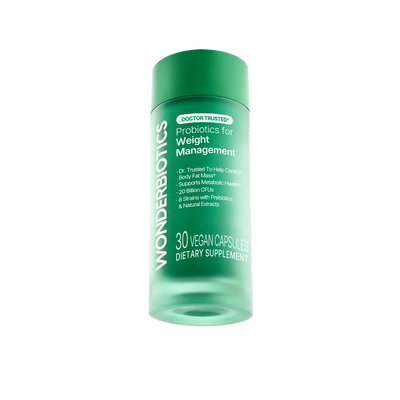
For us at WonderBiotics, the part of this story that connects most directly to our work is the gut microbiome. Exercise is one of the better-evidenced ways to maintain microbial diversity and SCFA production over time, and a diverse, well-fed microbiome is one of the inputs that supports metabolic, immune, and digestive health.20,21 Probiotics belong in that conversation as adjuncts to the foundational habits (movement, sleep, food, stress), not as a substitute for them. A gut-supportive product can sit alongside an exercise habit. It cannot replace one.
The most useful version of the "exercise as a miracle drug" framing is also the most boring: pick a pattern you can keep, do it most days, lift heavier things over time, sit less, and let the rest of your life be quietly transformed by something that does not need a marketing budget.
Related Reading
- For habits that make any exercise plan stick, read Your WonderBiotics Lifestyle Plan.
- Want the foundational microbiome explainer? See Understanding the Human Microbiome.
- For the fiber side of the gut-and-exercise story, read Fiber for Gut Health: Your WonderGuide.
- For the metabolic engine behind training, see Metabolism Explained.
- If the calorie question is on your mind, read Are All Calories the Same?
- To see our gut-targeted weight-support approach, visit Probiotics for Weight Management.
References
- Sallis RE. Exercise is medicine: a call to action for physicians to assess and prescribe exercise. The Physician and Sportsmedicine. 2015. https://pubmed.ncbi.nlm.nih.gov/25684558/
- Ramirez-Velez R, et al. Being consistently physically active in adulthood is linked to 30 to 40 percent lower all-cause mortality. British Journal of Sports Medicine / ScienceDaily summary. 2025. https://www.sciencedaily.com/releases/2025/07/250711224321.htm
- American Heart Association / PMC review. More People, More Active, More Often for Heart Health. 2024. https://pmc.ncbi.nlm.nih.gov/articles/PMC11067976/
- Mandsager K, et al. Association of Cardiorespiratory Fitness With Long-term Mortality Among Adults Undergoing Exercise Treadmill Testing. JAMA Network Open (via Peter Attia synthesis). 2018. https://peterattiamd.com/how-does-vo2-max-correlate-with-longevity/
- Rezende LFM, et al. Resistance Training and Mortality Risk: A Systematic Review and Meta-Analysis. American Journal of Preventive Medicine. 2022. https://pubmed.ncbi.nlm.nih.gov/35599175/
- Momma H, et al. Muscle-strengthening activities are associated with lower risk and mortality in major non-communicable diseases. British Journal of Sports Medicine / TCTMD summary. 2022. https://www.tctmd.com/news/strength-training-linked-less-premature-mortality-cvd-and-diabetes
- American Heart Association. Recommendations for Physical Activity in Adults. AHA Official Guidance. 2024. https://www.heart.org/en/healthy-living/exercise-and-physical-activity/fitness-basics/aha-recs-for-physical-activity-in-adults
- CDC. Adding Physical Activity as an Adult. CDC.gov. 2025. https://www.cdc.gov/physical-activity-basics/adding-adults/index.html
- Storoschuk K, et al. Much Ado About Zone 2: A Narrative Review Assessing the Efficacy of Zone 2 Training. Sports Medicine. 2025. https://pubmed.ncbi.nlm.nih.gov/40560504/
- Liu PZ, Nusslock R. Exercise-Mediated Neurogenesis in the Hippocampus via BDNF. PMC. 2018. https://pmc.ncbi.nlm.nih.gov/articles/PMC5808288/
- Tucker WJ, Angadi SS, Gaesser GA. Excess Postexercise Oxygen Consumption After High-Intensity and Sprint Interval Exercise. Journal of Strength and Conditioning Research. 2016. https://pubmed.ncbi.nlm.nih.gov/26950358/
- Cronin P, et al. Dietary Fiber Intake and Gut Microbiota in Human Health. PMC. 2022. https://pmc.ncbi.nlm.nih.gov/articles/PMC9787832/
- Wisloff U, et al. A single weekly bout of exercise may reduce cardiovascular mortality: The HUNT Study, Norway. European Journal of Cardiovascular Prevention and Rehabilitation. 2006. https://pubmed.ncbi.nlm.nih.gov/17001221/
- Harvard Medical School / MGH. Exercise Cuts Heart Disease Risk in Part by Lowering Stress, Study Finds. Harvard Gazette / JACC. 2024. https://news.harvard.edu/gazette/story/2024/04/exercise-cuts-heart-disease-risk-in-part-by-lowering-stress-study-finds/
- Noetel M, et al. Effect of exercise for depression: systematic review and network meta-analysis of randomised controlled trials. BMJ. 2024. https://pubmed.ncbi.nlm.nih.gov/38355154/
- Munro NR, et al. Effect of exercise on depression and anxiety symptoms: systematic umbrella review with meta-meta-analysis. British Journal of Sports Medicine. 2026. https://www.news-medical.net/news/20260210/Analysis-finds-aerobic-exercise-to-be-most-effective-for-reducing-depression-and-anxiety.aspx
- Phillips C. Brain-Derived Neurotrophic Factor, Depression, and Physical Activity. PMC. 2017. https://pmc.ncbi.nlm.nih.gov/articles/PMC5591905/
- Siebers M, et al. Do Endocannabinoids Cause the Runner's High? Frontiers / PMC. 2021. https://pmc.ncbi.nlm.nih.gov/articles/PMC10159215/
- Hawley JA, Lessard SJ. Exercise training-induced improvements in insulin sensitivity. Acta Physiologica / PMC. 2021. https://pubmed.ncbi.nlm.nih.gov/34054574/
- Healthist. People who exercise regularly have a highly diverse gut microbiome. Healthist.net. https://healthist.net/en/nutrition/2478/
- Effects of Physical Exercise on the Microbiota in Irritable Bowel Syndrome and Functional Gastrointestinal Disorders. PMC. 2024. https://pmc.ncbi.nlm.nih.gov/articles/PMC11356817/
- Scheiman J, Luber JM, Chavkin TA, et al. (Kostic lab, Joslin/Harvard). Meta'omic analysis of elite athletes identifies a performance-enhancing microbe. Nature Medicine. 2019. https://pmc.ncbi.nlm.nih.gov/articles/PMC7368972/
- Harvard Medical School. Microbiotic Fuel (Veillonella research summary). HMS News. 2019. https://hms.harvard.edu/news/microbiotic-fuel
- RACGP. Exercise (Osteoporosis Clinical Guideline). Royal Australian College of General Practitioners. https://www.racgp.org.au/clinical-resources/clinical-guidelines/key-racgp-guidelines/view-all-racgp-guidelines/osteoporosis/general-principles/exercise
- Mera P, Ferron M, et al. Osteocalcin Signaling in Myofibers Is Necessary and Sufficient for Optimum Adaptation to Exercise. Cell Metabolism. 2016. https://www.sciencedirect.com/science/article/pii/S1550413116302224
- Karsenty G, et al. Osteocalcin: A Multifaceted Bone-Derived Hormone. PMC. 2024. https://pmc.ncbi.nlm.nih.gov/articles/PMC11059196/
- UC San Diego / JAHA. Sedentary Behavior Increases Mortality Risk. UCSD Today. 2024. https://today.ucsd.edu/story/sedentary-behavior-increases-mortality-risk
- Men's Health UK. How Your Step Count Compares to Men Across History. 2025. https://www.menshealth.com/uk/fitness/cardio-exercise/a65651219/step-count-through-history/

Taylor Cottle, PhD
Taylor is a biochemist and biotech founder who specializes in translating microbiome and metabolic science into clear, evidence-aware health education
Read more

WonderBiotics Weight Management: What the Evidence Shows

Food Noise Meaning: Definition, Scale and Tracking Guide

Weight-Loss Probiotic Strains With Replicated Evidence


