
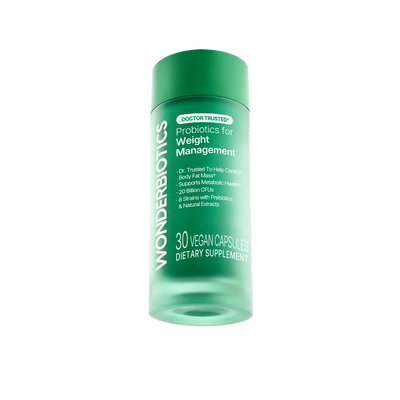


Your WonderBiotics Lifestyle Plan: Building Habits That Actually Stick

You've decided to take WonderBiotics. That's a powerful first step toward better gut health and sustainable weight management. Now comes the part that makes the real difference: turning that daily capsule into a cornerstone habit that anchors your entire wellness routine.
Here's the thing about habits: they're easier to build when you stack them together. Taking your WonderBiotics capsule every day creates a perfect opportunity to layer in other healthy choices, one small step at a time.
Start With Your WonderBiotics Ritual
Pick a specific meal to take your capsule. Most people choose breakfast or lunch since the guidelines recommend taking it within 30 minutes after eating. This timing helps the probiotics survive stomach acid more effectively.
Why this matters: You're already eating. You're already at the table. Adding one capsule to this existing routine requires almost no extra effort.
Use this moment as your daily reset. When you take that capsule, pause for 10 seconds and ask yourself: "What's one small thing I can do today to support my gut and my health?" Some days it might be drinking an extra glass of water. Other days it might be adding vegetables to dinner. The key is connecting the physical act of taking WonderBiotics to the intention of caring for your body.
Week 1-2: Add Fiber to What You Already Eat
Don't overhaul your entire diet. Just add fiber-rich foods to meals you're already eating.
Practical examples:
- Throw a handful of spinach into your morning eggs
- Add berries to your yogurt or oatmeal
- Toss chickpeas or beans into your salad at lunch
- Snack on an apple with peanut butter instead of chips
The goal: 25-35 grams of fiber daily from vegetables, fruits, whole grains, and legumes1. Your gut bacteria ferment this fiber into short-chain fatty acids that support metabolism, reduce inflammation, and help regulate appetite2.
Why start here: WonderBiotics needs fiber to thrive. Think of fiber as food for your probiotics. Without it, you're not getting the full benefit of the formula.
Week 3-4: Create a Modest Calorie Deficit Without Feeling Deprived
Here's where WonderBiotics does some heavy lifting for you. Clinical studies show it reduces calorie intake by about 320 calories per day naturally by regulating appetite3. You're not white-knuckling through hunger. Your gut bacteria are literally changing how your brain perceives fullness.
Practical strategy: Eat in the right order
- Start with vegetables (fiber fills you up)
- Move to protein (keeps you satisfied)
- Finish with starches and grains (you'll naturally eat less)
This eating sequence slows glucose absorption and helps you feel full faster without counting every calorie4.
Add one simple rule: Stop eating 3 hours before bed. Set a kitchen "closing time" and stick to it. This gives your digestive system time to rest and allows overnight fat burning instead of late-night digestion.
Month 2: Stack Movement Into Your Existing Schedule
You don't need to join a gym or run marathons. The Physical Activity Guidelines recommend 150 minutes of moderate-intensity activity per week5. That's 30 minutes, 5 days a week.
Practical movement stacking:
- Take your WonderBiotics after breakfast, then immediately go for a 15-minute walk before work
- Do 10 minutes of stretching or bodyweight exercises right after taking your capsule at lunch
- Walk during phone calls or meetings when possible
- Take the stairs instead of the elevator
Why movement matters for your microbiome: Exercise increases the diversity of gut bacteria and promotes beneficial strains that support metabolic health6. Physical activity enhances the effects of probiotics by improving gut motility and reducing inflammation.
The key: Find activities you actually enjoy. Hate running? Try dancing. Can't stand the gym? Hike with friends. The best exercise is the one you'll actually do consistently.
Month 3+: Protect Your Sleep
The CDC recommends 7-9 hours of sleep per night7, and this isn't optional if you want WonderBiotics to work optimally. Poor sleep disrupts hunger hormones like ghrelin and leptin, making you crave high-calorie foods and overeat throughout the day.
Sleep also directly affects your microbiome. Studies show that sleep deprivation alters gut bacteria composition in ways that promote weight gain and metabolic dysfunction8. When you sleep well, your microbiome functions better, and WonderBiotics can do its job more effectively.
Practical sleep habits to stack:
- Take your evening WonderBiotics capsule after dinner, then start your wind-down routine
- Set a consistent bedtime alarm (not just a wake-up alarm)
- Keep your bedroom cool (60-67°F is ideal)
- No screens for 1 hour before bed (read, stretch, or meditate instead)
Start with 30 minutes. If you normally go to bed at midnight, try 11:30 PM this week. Next week, try 11:00 PM. Gradual changes stick better than dramatic overhauls.
The WonderBiotics Habit Framework: How It All Connects
Your daily WonderBiotics capsule becomes the anchor point for everything else:
Morning routine:
- Eat breakfast with added fiber (vegetables, berries, whole grains)
- Take WonderBiotics capsule
- 15-minute walk or movement
Evening routine:
- Eat dinner (vegetables first, protein second, carbs last)
- Kitchen closes 3 hours before bed
- Wind down with no screens
- Consistent bedtime for 7-9 hours of sleep
Small wins compound. You don't need to do everything perfectly. You just need to do something consistently. The people who see the best results with WonderBiotics are the ones who commit to these foundational habits for 3-6 months, not 3-6 days.
Your Microbiome Is Always Adapting
Every meal, every workout, every night of good sleep sends signals to your gut bacteria about what kind of environment they're living in. WonderBiotics gives you the right bacterial strains. Your daily habits give those strains the environment they need to thrive.
Track what works for you. Notice which foods make you feel energized versus sluggish. Pay attention to how movement affects your digestion and mood. Celebrate when your clothes fit better or when you naturally stop craving sugar.
Be patient with yourself. Building a healthy microbiome takes months, not days. But with WonderBiotics as your daily cornerstone habit, you're setting yourself up for sustainable success.
Your gut microbiome is constantly rebuilding itself based on what you feed it, how you move, and how well you rest. Give it the right environment, and WonderBiotics can help you build the easy-slim body type that lasts.
Pair these habits with our best probiotics for weight loss, built on the clinically studied B420 strain.
References
- U.S. Department of Agriculture and U.S. Department of Health and Human Services. Dietary Guidelines for Americans, 2020-2025. 9th Edition. December 2020. https://www.dietaryguidelines.gov/sites/default/files/2020-12/Dietary_Guidelines_for_Americans_2020-2025.pdf
- Koh A, et al. From dietary fiber to host physiology: short-chain fatty acids as key bacterial metabolites. Cell. 2016;165(6):1332-1345. https://pubmed.ncbi.nlm.nih.gov/27259147/
- Stenman LK, et al. Probiotic with or without fiber controls body fat mass, associated with serum zonulin, in overweight and obese adults: randomized controlled trial. EBioMedicine. 2016;13:190-200. https://pubmed.ncbi.nlm.nih.gov/27810310/
- Shukla AP, et al. Food order has a significant impact on postprandial glucose and insulin levels. Diabetes Care. 2015;38(7):e98-99. https://pubmed.ncbi.nlm.nih.gov/26106234/
- U.S. Department of Health and Human Services. Physical Activity Guidelines for Americans, 2nd edition. 2018. https://health.gov/sites/default/files/2019-09/Physical_Activity_Guidelines_2nd_edition.pdf
- Monda V, et al. Exercise modifies the gut microbiota with positive health effects. Oxid Med Cell Longev. 2017;2017:3831972. https://pubmed.ncbi.nlm.nih.gov/28357027/
- Centers for Disease Control and Prevention. How Much Sleep Do I Need? Reviewed September 14, 2022. https://www.cdc.gov/sleep/about_sleep/how_much_sleep.html
- Smith RP, et al. Gut microbiome diversity is associated with sleep physiology in humans. PLoS One. 2019;14(10):e0222394. https://pubmed.ncbi.nlm.nih.gov/31589627/

Taylor Cottle, PhD
Biotechnologist | PhD from Johns Hopkins
Read more

WonderBiotics Weight Management: What the Evidence Shows

Food Noise Meaning: Definition, Scale and Tracking Guide

Weight-Loss Probiotic Strains With Replicated Evidence


