


Appetite Control Supplements and Biological Signals

Appetite Control Supplements: The Biological Signals That Determine Which Ones Work
Appetite is not a single biological event. It is the output of multiple overlapping systems: gut hormones, blood glucose dynamics, gut microbiome composition, and behavioral/cognitive signals that together determine how hungry a person feels, how quickly they feel full, and whether food thoughts persist between meals. Most appetite control supplements address one of these systems. The more relevant question is which systems a supplement actually targets, and whether the evidence for that target holds up. Working through that question leads to clearer selection criteria than any ranked list.

What "Appetite Control" Actually Involves
Three distinct layers shape appetite and food intake:
Physical hunger signals. Ghrelin, the hormone produced in the stomach, rises before meals and signals hunger. Leptin, produced by fat cells, signals satiety to the brain over longer time horizons. Blood glucose fluctuations, particularly post-meal crashes, can trigger reactive hunger independent of actual caloric need.
Gut hormone signaling. Specialized cells in the intestinal lining release appetite-suppressing hormones including glucagon-like peptide-1 (GLP-1) and peptide YY in response to food and gut bacterial metabolites. These hormones slow gastric emptying, signal fullness to the brain, and influence total food intake.
Behavioral and cognitive hunger. Beyond physical signals, many people experience persistent, intrusive food thoughts that do not reflect physiological need. This behavioral layer, which the WONDERBIOTICS formula addresses through its CraveLock™ Technology, operates through neural and habit-based pathways that are distinct from gut hormone levels.
Effective appetite control, in practice, requires addressing more than one of these layers.
Gut Hormones, Microbiome, and the Satiety Signal
The gut microbiome is a key upstream regulator of the gut hormone satiety signal. Gut bacteria produce short-chain fatty acids (SCFAs) by fermenting dietary fiber. SCFAs act as signaling molecules to enteroendocrine cells in the intestinal lining, stimulating the release of GLP-1 and peptide YY.<sup>1</sup> These hormones slow gastric emptying, reduce food intake, and signal fullness via the gut-brain axis. A gut microbiome that produces less of these SCFAs, a pattern associated with lower microbial diversity, generates weaker satiety signals.
GLP-1 is the same hormone pathway activated by GLP-1 receptor agonist drugs. Natural support for GLP-1 secretion through the gut microbiome and targeted plant compounds represents the non-pharmaceutical approach to this satiety signal.
Eriomin® (lemon extract) is a standardized flavonoid complex with ingredient-level clinical research in prediabetic populations reporting support for natural GLP-1 levels.<sup>2</sup> A separate clinical trial found that Eriomin® supplementation was associated with changes in gut microbiome composition, including shifts in bacterial families linked to glycemic profile.<sup>3</sup> This suggests Eriomin® may work through both a direct flavonoid-L-cell interaction and an indirect microbiome-mediated pathway.
The Gut Composition Dimension
The probiotic strain Bifidobacterium animalis ssp. lactis B420 (B420™) demonstrated an appetite-related finding in its core 6-month, double-blind, randomized controlled trial (RCT). Post-hoc factorial analysis found that the B420™ group consumed approximately 300 kcal less daily energy intake than placebo alongside body fat mass and waist circumference reductions.<sup>4</sup> This reduction in energy intake is a measured behavioral output of appetite regulation, connecting gut microbiome composition directly to how much people eat.
The mechanism likely runs through the SCFA pathway described above: a healthier gut microbiome composition generates more consistent GLP-1 and peptide YY signaling, which supports more appropriate satiety responses.
Blood Glucose Stability and Hunger
Reactive hunger driven by blood glucose fluctuations is a distinct appetite driver from gut hormone signaling. When blood glucose falls rapidly after a carbohydrate-dense meal, the body signals hunger again within a short period, independently of total caloric intake. Stabilizing blood glucose dynamics reduces this source of appetite dysregulation.
Berberine, and its more bioavailable form Dihydroberberine (DHB), has clinical evidence for supporting blood glucose and insulin sensitivity in populations with metabolic dysfunction.<sup>5</sup> By reducing the amplitude of post-meal blood glucose fluctuations, DHB adds a metabolic stability dimension to appetite management.
WONDERBIOTICS: Addressing the Full Picture
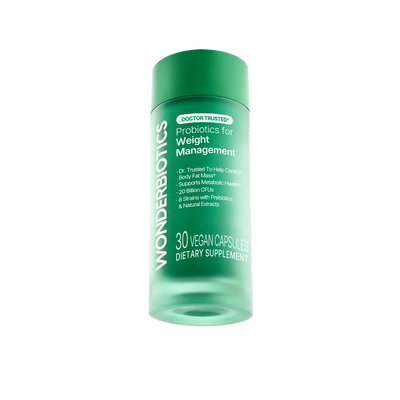
WONDERBIOTICS is formulated around all three appetite layers described above. The Probiotics for Weight Management formula brings together:
- B420™ for gut composition, with the energy intake finding from the 6-month RCT as direct evidence of an appetite effect
- Eriomin® (lemon extract) for natural GLP-1 level support via both direct flavonoid and microbiome-mediated pathways
- Dihydroberberine for blood glucose stability and metabolic support
- CraveLock™ Technology, the formula's proprietary approach to appetite management and Food Noise, addressing the behavioral layer that physical and hormonal signals alone do not cover
For delivery, WONDERBIOTICS uses PolarSeal Technology to help protect the probiotic blend. In testing, 99.9% of the bacterial strain survived conditions simulating gut-like acidity, and 98.2% of the bacteria remained alive through the point of consumption.
The key ingredients behind the formula are backed by 624 clinical studies and 44,692 participants. The formula was developed by a team of PhD scientists and industry experts.
A Realistic Timeline
Appetite regulation through gut composition changes is not immediate. Shifting gut microbiome composition and hormone signaling patterns takes time. We recommend a usage period of 3 to 6 months, to give your gut time to adapt and your body time to respond, alongside a nutritious diet and consistent physical activity.
Explore WONDERBIOTICS Probiotics for Weight Management
References
- Martin AM, Sun EW, Rogers GB, Keating DJ. The influence of the gut microbiome on host metabolism through the regulation of gut hormone release. Front Physiol. 2019;10:428. https://www.frontiersin.org/journals/physiology/articles/10.3389/fphys.2019.00428/full
- Cesar TB, Manzini Ramos FM, Ribeiro CB. Nutraceutical Eriocitrin (Eriomin) Reduces Hyperglycemia by Increasing Glucagon-Like Peptide 1 and Downregulates Systemic Inflammation: A Crossover-Randomized Clinical Trial. J Med Food. 2022;25(11):1087-1094. https://www.ncbi.nlm.nih.gov/pmc/articles/PMC9700344/
- Ramos FMM, Cesar TB, et al. Lemon flavonoids nutraceutical (Eriomin®) attenuates prediabetes intestinal dysbiosis: a double-blind randomized controlled trial. Food Sci Nutr. 2023;11(12):7574-7587. https://www.ncbi.nlm.nih.gov/pmc/articles/PMC10630820/
- Stenman LK, Lehtinen MJ, Meland N, et al. Probiotic with or without fiber controls body fat mass, associated with serum zonulin, in overweight and obese adults: randomized controlled trial. EBioMedicine. 2016;13:190-200. https://www.sciencedirect.com/science/article/pii/S2352396416304972
- Ye Y, Liu X, Wu N, et al. Efficacy and safety of berberine alone for several metabolic disorders: a systematic review and meta-analysis of randomized clinical trials. Front Pharmacol. 2021;12:653887. https://pmc.ncbi.nlm.nih.gov/articles/PMC8107691/


