


What supplements help women feel fuller for longer?

What supplements help women feel fuller for longer?
The supplements with the most consistent evidence for satiety in women work through two mechanisms: slowing the rate at which food leaves the stomach (extending physical fullness), and supporting the gut hormone pathways that signal satiety to the brain. Neither mechanism produces the appetite suppression of pharmaceutical GLP-1 medications or stimulant-based diet pills, but they work with the body's own satiety systems rather than overriding them, which makes them compatible with long-term daily use.

The Most Directly Supported Options
Protein Powder: The Clearest Satiety Effect
Protein has the highest satiety value per calorie of any macronutrient. It suppresses ghrelin, stimulates GLP-1 and peptide YY from the gut, and slows gastric emptying. Protein powder is a delivery mechanism for reaching the 1.0-1.2 g/kg/day target that supports both satiety and muscle preservation in midlife women. This is not a supplement effect; it is a macronutrient effect delivered in supplement form when dietary intake is insufficient.
Beta-Glucan (Oat Fiber Supplements): GLP-1 Support
Beta-glucan, the soluble fiber in oats and barley, forms a viscous gel in the gut that slows gastric emptying and blunts blood sugar spikes. When gut bacteria ferment it, they produce short-chain fatty acids that stimulate GLP-1 from intestinal L-cells. The NIH ODS confirms beta-glucans may increase satiety and delay GI transit.1 The effect is dose-dependent and requires consistent daily intake to accumulate. Oat beta-glucan supplements and oat bran both count.
Psyllium Husk: Mechanical Satiety and Regularity
Psyllium husk absorbs water and expands in the stomach, slowing gastric emptying and supporting physical fullness. It also supports regularity, which reduces the bloating that can interfere with normal eating patterns. Well tolerated at 5-10 g per day with adequate water. Less fermentable than beta-glucan, so less likely to cause gas during adjustment.
Glucomannan: Limited for Satiety, Useful for Regularity
Glucomannan is widely marketed for appetite control. An 8-week placebo-controlled trial found no significant difference in hunger or fullness vs. placebo in overweight adults.1 Well tolerated; useful for regularity support. Reasonable to include in a fiber routine, but direct satiety expectations should be modest.
Saffron Extract (Satiereal): For Mood-Linked Fullness
For the serotonin-driven component of reduced satiety, saffron extract has one directly relevant RCT. In a randomized, double-blind, placebo-controlled trial of 60 mildly overweight women over 8 weeks, saffron extract significantly reduced snacking frequency and produced a satiating effect compared to placebo.2 The mechanism involves serotonin pathway support, relevant to the reward-seeking eating that accompanies hormonal changes in perimenopause and stress.
Evidence classification: one RCT in a general female population; single trial; not perimenopause-specific. Non-stimulant with no cardiovascular side effects.
Probiotics Supporting GLP-1 Secretion
Specific probiotic strains and botanical ingredients that support natural GLP-1 secretion from intestinal L-cells contribute to the satiety hormone layer. This is an indirect mechanism: gut bacteria fermenting fiber produce short-chain fatty acids that stimulate GLP-1; certain probiotic strains may enhance this through microbiome composition effects; botanical ingredients like Eriomin may support GLP-1 secretion directly.
B420™ (Bifidobacterium animalis subsp. lactis 420) showed reduced energy intake alongside body fat management effects in a 6-month RCT in overweight adults.3 The energy intake reduction suggests an appetite-adjacent component. Ingredient-level evidence; not a primary appetite endpoint; not women-specific.
Terms to Know!
- Peptide YY (PYY): A gut hormone released after eating that suppresses appetite and slows GI transit. Stimulated by protein intake and short-chain fatty acids from fiber fermentation.
- Short-chain fatty acids: Produced by gut bacteria fermenting soluble fiber. Stimulate GLP-1 and PYY from intestinal L-cells, connecting dietary fiber to satiety hormone signaling.
What Does Not Help for Longer Fullness
Green tea extract: possible modest metabolic effect per NIH ODS, with significant liver damage risk at higher standardized doses.1 Not a satiety ingredient; not recommended for this goal given the safety tradeoff.
Stimulant-based appetite suppressants: reduce appetite short-term but disrupt sleep, elevate cortisol, and produce tolerance. Cortisol elevation promotes abdominal fat storage and compounds the hormonal disruption that drives hunger in the first place.
Chromium: limited evidence for modest carbohydrate craving reduction in specific populations. Not a general satiety supplement; relevant only for the carbohydrate-craving component of hunger.
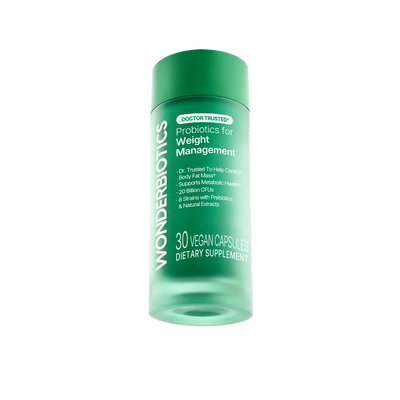
WONDERBIOTICS for Women's Satiety Support
WONDERBIOTICS combines CraveLock™ (Eriomin lemon extract for natural GLP-1 secretion support), B420™ (the gut-metabolic probiotic with energy intake evidence), 5X Dihydroberberine (blood sugar stability within the normal range), and HN019 (gut comfort and regularity support).
The formula is designed for appetite-aware routines and gut-metabolic health, without stimulants. Each ingredient addresses a different dimension of satiety: CraveLock™ supports the GLP-1 satiety hormone pathway, B420 supports the gut-microbiome environment, dihydroberberine addresses the insulin resistance component of reactive hunger, and HN019 supports GI comfort and regularity.
WONDERBIOTICS uses PolarSeal Technology: in testing, 99.9% of the bacterial strain survived gut-like acidic conditions and 98.2% remained alive through the point of consumption. CFU is guaranteed at expiration. No stimulants; no caffeine.
Key ingredients are backed by 624 clinical studies involving 44,692 participants at the ingredient level. The finished product has not been studied in a dedicated clinical trial. The formula supports fullness-focused routines and metabolic wellness alongside adequate protein and dietary fiber.
Read the WONDERBIOTICS Review for a full look at the formula.
This article is for educational purposes only and is not medical advice. It is not intended to diagnose, treat, cure, or prevent any disease. If you have a medical condition or take medications, talk with a licensed clinician before starting supplements.
References
- National Institutes of Health, Office of Dietary Supplements. Dietary Supplements for Weight Loss: Health Professional Fact Sheet. Updated 2024. https://ods.od.nih.gov/factsheets/WeightLoss-HealthProfessional/
- Gout B, Bourges C, Paineau-Dubreuil S. Satiereal, a Crocus sativus L extract, reduces snacking and increases satiety in a randomized placebo-controlled study of mildly overweight, healthy women. Nutr Res. 2010;30(5):305-313. https://pubmed.ncbi.nlm.nih.gov/20579522/
- Stenman LK, Lehtinen MJ, Meland N, et al. Probiotic With or Without Fiber Controls Body Fat Mass, Associated With Serum Zonulin, in Overweight and Obese Adults-Randomized Controlled Trial. EBioMedicine. 2016;13:190-200. https://pubmed.ncbi.nlm.nih.gov/27810310/


