


Probiotics Worth Trying for Microbiome-Based Weight Support

Which Probiotics Are Worth Trying If I Want Microbiome-Based Weight Support?
"Worth trying" deserves a careful answer. The probiotic shelf is full of products marketed for weight, gut health, and general wellness, and most of them cannot be matched to the human research that would justify the marketing. A short answer is possible at the strain level, where specific named bacterial strains have published human randomized controlled trial (RCT) data on weight-related endpoints. The strains worth your attention are a small set, identified by trial endpoint, and chosen by which outcome matters to you. This article maps that small set, gives you a decision-framework for picking among them, and explains what "worth trying" looks like once a strain is in a real product.
See the full WonderBiotics reviews page.

At a Glance
Three named strains have the strongest publicly available human RCT data on weight-related endpoints. Pick by the outcome you care about most.
- Body fat mass, waist circumference, energy intake in overweight/obese adults → Bifidobacterium animalis subsp. lactis B420
- Abdominal visceral fat in adults with obese tendencies → Lactobacillus gasseri SBT2055 (LG2055)
- Weight loss in women specifically → Lactobacillus rhamnosus CGMCC 1.3724 (LPR)
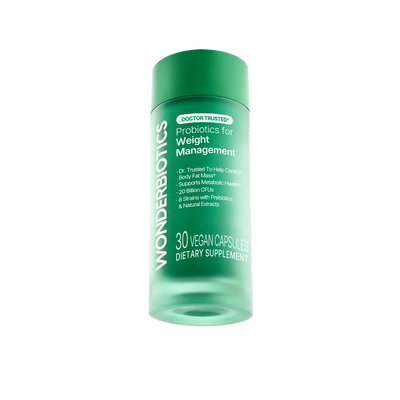
WONDERBIOTICS Probiotics for Weight Management uses B420™ at the named-strain level, paired with non-probiotic ingredients chosen for adjacent appetite and metabolic biology.
What "Microbiome-Based Weight Support" Actually Refers To
Before choosing a strain, the term itself deserves a clean read. "Microbiome-based weight support" describes weight-management strategies that work, at least in part, by influencing the gut microbiome's role in host metabolism. That includes its role in energy harvest from food, in metabolic signaling (gut hormones, bile acids, short-chain fatty acids), and in low-grade inflammatory tone. The biological connection between gut microbiota composition and host metabolic health is well documented in the basic science literature.[1]
What that connection does not tell you, on its own, is whether any specific probiotic will engage the relevant biology in your body. The mechanism is plausible at the category level. The proof sits at the strain-and-population level, in human RCTs measuring specific weight-related endpoints.
That distinction is what makes "worth trying" answerable in practice. A probiotic is worth trying for microbiome-based weight support when it contains a named strain that has been tested for a relevant endpoint in a published human RCT, at a dose comparable to the studied dose. Anything looser dilutes the evidence trail to the point where the bottle and the research no longer connect.
The Category-Level Signal: Modest and Heterogeneous
Two independent meta-analyses give the honest baseline. A 2018 systematic review and meta-analysis covering 25 RCTs of probiotic supplementation in overweight or obese subjects reported small but statistically significant reductions in body weight (weighted mean difference -0.6 kg) and BMI (-0.27 kg/m[2]), with small effect sizes overall.[2] A 2019 meta-analysis of 12 RCTs covering 821 overweight or obese adults reported approximately -0.55 kg in body weight, -0.30 kg/m[2] in BMI, and -1.20 cm in waist circumference compared to placebo, with substantial heterogeneity across included studies.[3]
Two readings emerge.
The category signal is real and modest. Probiotics, taken as a heterogeneous group, produce small mean changes on weight endpoints. They are not a stand-alone obesity treatment.
The heterogeneity is the more useful information. Different strains, doses, durations, and populations produced different results. The pooled average smooths over the parts of the literature where specific strains showed larger effects on specific endpoints. Choosing a strain that did better than the pool is more useful than treating the pool as the answer.
That leads directly to the strain-by-endpoint map.
The Strain-by-Endpoint Map
Probiotic effects depend on the specific strain, and evidence from one strain does not transfer to another.[4] The strains below have published human RCT data on the endpoints listed.
B420™ (Bifidobacterium animalis subsp. lactis 420) → body fat mass, waist circumference, energy intake. A 6-month randomized, placebo-controlled trial enrolled 225 overweight and obese adults aged 18-65, with post-hoc factorial analysis showing body fat mass differed by -4.0% versus placebo (P=0.002), waist circumference dropped by 2.4 cm more than placebo, and daily energy intake was reduced by approximately 300 kcal compared to placebo.[5] The trial population was general overweight/obese adults, both sexes, with no menopausal-status or other subgroup stratification. The endpoint cluster (body fat, waist, energy intake) makes B420™ the most directly relevant published strain for general weight-management goals.
LG2055 (Lactobacillus gasseri SBT2055) → abdominal visceral fat. A 12-week randomized, double-blind, placebo-controlled trial in 87 Japanese adults with obese tendencies (BMI 24.2-30.7) compared fermented milk with LG2055 to fermented milk without it. The active group showed a 4.6% decrease from baseline in abdominal visceral fat area measured by computed tomography, with a smaller but significant reduction in subcutaneous fat.[6] The delivery was fermented milk, the population was Japanese adults, and generalization to capsule form and other populations is not automatic.
CGMCC 1.3724 (LPR, Lactobacillus rhamnosus CGMCC 1.3724) → weight loss in women specifically. A 24-week double-blind, placebo-controlled trial in 125 obese adults paired probiotic capsules with energy restriction for the first 12 weeks and a maintenance phase for the next 12 weeks. Mean weight loss in women in the LPR group was significantly higher than in women in the placebo group (P=0.02), while no comparable effect was observed in men.[7] The sex-by-treatment interaction is the trial's most striking finding. The published positive signal is in women, with no comparable signal in mixed populations.
Two practical observations about this map.
Each row is a single published RCT. None of these strains has multiple large, independently replicated RCTs on the listed endpoint. The category is still maturing.
Pick by endpoint, not by name recognition. "Best for weight loss" is not how probiotic evidence is organized. "B420 for body fat and waist," "LG2055 for visceral fat," "LPR for weight loss in women" is closer to how the published evidence actually reads.
Terms to Know!
- Postbiotic: a preparation of inanimate microorganisms or their components that confers a health benefit on the host; postbiotics are distinct from probiotics (which require live organisms) and have a separate evidence framework.
- Synbiotic: a combination of probiotics and prebiotics designed to work together, where the prebiotic component selectively supports the probiotic strain's activity; synbiotic effects are evaluated as a combined formulation, not assumed from the component parts alone.
Which Strain Is Worth Trying for You
The decision-framework runs in three short questions.
1\. What endpoint do you actually care about? Total weight, body fat mass, abdominal visceral fat, or waist circumference are not interchangeable goals. Articulating the endpoint sharpens the strain choice. If body composition matters to you more than the scale, B420™ and LG2055 are the strains with directly relevant published data.
2\. Are you a woman, and is "weight loss specifically" your goal? The CGMCC 1.3724 trial is the only published probiotic RCT with a clear sex-by-treatment interaction favoring women on a weight-loss endpoint. That single trial is the strongest published signal in this specific question.
3\. Can you verify the strain is actually in the product at a comparable dose? A label that names a strain by its full identifier (B420™, SBT2055, CGMCC 1.3724) and discloses CFU per strain at a dose aligned with the cited trial gets you closer to "worth trying." A generic Bifidobacterium animalis without a strain code or per-strain CFU does not.
The candidates outside this short list are not necessarily inferior, just less well-supported by published human RCT data on weight endpoints. The probiotic field is broad, and other strains may have evidence on different endpoints (immune function, IBS, bowel regularity) that are real but separate.
How to Read a Probiotic Label for Microbiome-Based Weight Support
The same evaluation framework applies regardless of which strain you choose to try.
Named strains with full identifiers. Genus, species, and strain code. Without all three, evidence matching is structurally impossible.
CFU per strain at studied doses. Not just total CFU per capsule. The strain that has been studied at 10¹⁰ CFU/day in trials may be present at far less in a product that prioritizes a long ingredient list over per-strain dosing.
Cited evidence on weight-related endpoints. A product that points to peer-reviewed human RCTs on body composition or waist circumference is being more transparent than one that gestures at "supports digestive wellness" without strain-specific weight data.
Delivery technology with testable performance. Live strains have to survive shelf life and digestion. Specific testable claims (acid survival, viability through to the point of consumption) carry more weight than the phrase "live cultures" alone.
Realistic timeframe. The published trials in this space run 12 to 24 weeks or longer. Expecting a meaningful endpoint shift in two weeks is not how the underlying biology works.
How WONDERBIOTICS Fits This Map
WONDERBIOTICS Probiotics for Weight Management is built around named ingredients with strain-and-endpoint matching, plus non-probiotic ingredients with their own ingredient-level mechanisms.
- B420™ is the probiotic strain in the formula, with the published 6-month RCT in overweight/obese adults as the ingredient-level evidence behind its inclusion.[5] The trial enrolled both sexes; WONDERBIOTICS uses B420™ at the named-strain level rather than as part of an anonymous blend. The trial population was overweight/obese adults of both sexes, so the available data sits at the ingredient-level human evidence tier and does not constitute a finished-product or population-specific validation.
- Eriomin® (lemon extract) is a citrus flavonoid extract studied for its effects on appetite-related signaling. Ingredient-level clinical research in prediabetic adults reports support for natural GLP-1 levels and adiponectin levels.[8] The cited research was in prediabetic adults of both sexes.
- Dihydroberberine is a modified version of berberine that achieves higher plasma berberine exposure at lower doses. It supports maintaining healthy blood sugar levels already within the normal range. Direct human evidence at the dihydroberberine level remains limited; its role here is to deliver berberine more effectively, with the active end-form remaining berberine in tissue.
The formula also features CraveLock™ Technology, a proprietary synergistic approach to appetite management and Food Noise.
WONDERBIOTICS uses PolarSeal Technology to help protect the probiotic blend. In testing, 99.9% of the bacterial strain survived gut-like acidic conditions, and 98.2% of the bacteria remained alive through to the point of consumption.
The core ingredients in the formula are backed by 624 clinical studies covering 44,692 participants. The formula was developed by PhD scientists and industry experts.
We recommend taking it consistently for 3-6 months alongside a balanced diet and regular movement, to give your gut time to adapt and your body time to respond. The timeline reflects how the underlying biology actually works.
FAQ
How long should I try a probiotic before deciding it is not working?
The published trials in this space run 12 to 24 weeks or longer. A 3-6 month consistent trial alongside a balanced diet and regular movement gives the underlying biology time to respond. Two-week or four-week assessments are too short to map onto how the cited research actually measured outcomes.
Should I take a probiotic alongside diet and exercise, or instead of them?
Alongside. The trials cited above were generally conducted in the context of habitual diet and lifestyle, and a probiotic is best understood as one input among many. Diet, sleep, movement, and stress regulation engage layers of biology that no probiotic can replace.
Is more CFU always better?
Higher CFU is not automatically better, and clinical trial doses for the strains above vary from approximately 10⁸ to 10¹¹ CFU/day depending on the strain. A formula with a strain at its studied dose is more interpretable than one with a much higher dose untethered to any specific trial.
What if I am pregnant, breastfeeding, immunocompromised, or have a serious medical condition?
These are scenarios where general consumer-product reasoning does not apply. Talk with your clinician before starting any probiotic.
Worth Trying Means Strain, Endpoint, Dose
"Worth trying" is decidable for probiotics in this category, with three pieces of information: which strain is in the product, what endpoint it has been studied for, and whether the dose in the product matches the studied dose. A formula that gives you that information openly is one you can decide about. A formula that does not is asking for trust without supplying the evidence trail that justifies it.
A weight-management probiotic that uses a strain like B420™, points to the published RCT, discloses dose, and protects live cultures with testable delivery technology meets the worth-trying standard. WONDERBIOTICS Probiotics for Weight Management is one option built on that logic.
References
- Fan Y, Pedersen O. Gut microbiota in human metabolic health and disease. Nat Rev Microbiol. 2021;19(1):55-71. https://www.nature.com/articles/s41579-020-0433-9
- Borgeraas H, Johnson LK, Skattebu J, Hertel JK, Hjelmesaeth J. Effects of probiotics on body weight, body mass index, fat mass and fat percentage in subjects with overweight or obesity: a systematic review and meta-analysis of randomized controlled trials. Obes Rev. 2018;19(2):219-232. https://onlinelibrary.wiley.com/doi/10.1111/obr.12626
- Wang ZB, Xin SS, Ding LN, et al. The potential role of probiotics in controlling overweight/obesity and associated metabolic parameters in adults: a systematic review and meta-analysis. Evid Based Complement Alternat Med. 2019;2019:3862971. https://onlinelibrary.wiley.com/doi/10.1155/2019/3862971
- Hill C, Guarner F, Reid G, et al. Expert consensus document. The International Scientific Association for Probiotics and Prebiotics consensus statement on the scope and appropriate use of the term probiotic. Nat Rev Gastroenterol Hepatol. 2014;11(8):506-514. https://www.nature.com/articles/nrgastro.2014.66
- Stenman LK, Lehtinen MJ, Meland N, et al. Probiotic with or without fiber controls body fat mass, associated with serum zonulin, in overweight and obese adults: randomized controlled trial. EBioMedicine. 2016;13:190-200. https://www.sciencedirect.com/science/article/pii/S2352396416304972
- Kadooka Y, Sato M, Imaizumi K, et al. Regulation of abdominal adiposity by probiotics (Lactobacillus gasseri SBT2055) in adults with obese tendencies in a randomized controlled trial. Eur J Clin Nutr. 2010;64(6):636-643. https://www.nature.com/articles/ejcn201019
- Sanchez M, Darimont C, Drapeau V, et al. Effect of Lactobacillus rhamnosus CGMCC 1.3724 supplementation on weight loss and maintenance in obese men and women. Br J Nutr. 2014;111(8):1507-1519. https://www.cambridge.org/core/journals/british-journal-of-nutrition/article/effect-of-lactobacillus-rhamnosus-cgmcc13724-supplementation-on-weight-loss-and-maintenance-in-obese-men-and-women/7C9810D79528C4ADC77A22EE45F9CA8E
- Ribeiro CB, Ramos FM, Manthey JA, Cesar TB. Effectiveness of Eriomin® in managing hyperglycemia and reversal of prediabetes condition: A double-blind, randomized, controlled study. Phytother Res. 2019;33(7):1921-1933. https://onlinelibrary.wiley.com/doi/10.1002/ptr.6386


