


Is fiber better than berberine for appetite support?

Is fiber better than berberine for appetite support?
The comparison is not quite right because they work through different mechanisms on different aspects of appetite. Fiber addresses appetite through gastric fullness, GLP-1 secretion, and blood sugar stability. Berberine addresses appetite indirectly through insulin sensitivity and glucose metabolism. Neither is a direct appetite suppressant, and for most people the answer is not one or the other but an understanding of which mechanism matches their primary driver of hunger and cravings.

What Fiber Does for Appetite
Dietary fiber, particularly soluble fiber, acts through three overlapping mechanisms:
Mechanical satiety. Soluble fibers like beta-glucan and psyllium absorb water and form a viscous gel that slows gastric emptying. This extends the physical sensation of fullness after a meal and blunts the speed at which glucose enters the bloodstream.
GLP-1 and peptide YY stimulation. When gut bacteria ferment soluble fiber, they produce short-chain fatty acids including butyrate, acetate, and propionate. These compounds stimulate GLP-1 and peptide YY release from intestinal L-cells, which signal satiety to the brain and slow food intake. This is a direct gut-to-brain appetite signal.
Blood sugar stabilization. Slowing glucose absorption prevents the rapid postprandial glucose spike and subsequent crash that generates reactive hunger, particularly the carbohydrate-specific cravings that follow high-glycemic meals.
The NIH Office of Dietary Supplements notes that beta-glucans may increase satiety and delay GI transit.1 These are mechanistically supported effects. The evidence for direct weight loss from fiber supplementation is more modest: glucomannan, one of the most marketed fiber supplements for appetite, showed no significant difference in weight loss, hunger, or fullness vs. placebo in an 8-week placebo-controlled trial in overweight adults, though it was well tolerated.
For appetite specifically, fiber's evidence is strongest for the blood sugar stability and physical fullness dimensions of hunger, not for food noise, cravings driven by stress or emotional eating, or appetite dysregulation driven by hormonal changes.
What Berberine Does for Appetite
Berberine does not directly suppress appetite. Its appetite-adjacent effects come through insulin sensitivity and glucose metabolism: by activating AMPK and improving cellular glucose uptake, berberine reduces the blood sugar fluctuations that generate reactive hunger in people with insulin resistance.
The clinical evidence for berberine is described by Cleveland Clinic as limited, and being plant-derived does not mean it is without risk, particularly at higher doses. Standard berberine has significant GI side effects at doses needed for metabolic effect, and the evidence for berberine specifically on hunger or cravings as a primary endpoint is sparse. Most berberine studies examine blood sugar markers, lipid levels, and weight as secondary outcomes.
Dihydroberberine is a modified form with approximately 5x higher plasma berberine exposure at lower oral doses, reducing the GI tolerability issue while achieving similar metabolic effects. This makes it a more practical option for the blood sugar stabilization component of appetite support, with less GI disruption than standard berberine.
The answer to which is better for appetite: if the primary hunger driver is blood sugar fluctuation and insulin resistance, the berberine pathway is more directly relevant. If the primary hunger driver is inadequate physical fullness and slow GI transit, fiber is more directly relevant. For most people, both are active in different meals and different time windows.
When Each Is More Relevant
Fiber makes more sense when hunger is physical: stomach emptiness, rapid hunger after meals, evening appetite driven by inadequate food volume earlier in the day. Dietary fiber from food (legumes, oats, vegetables) addresses this more effectively than most fiber supplements, but a fiber supplement at meals or as part of a daily routine can extend the satiety effect.
Berberine (or dihydroberberine) makes more sense when hunger is metabolic: reactive hunger driven by blood sugar drops after refined carbohydrate intake, carbohydrate-specific cravings, or documented insulin resistance. This is more relevant for women at midlife, where insulin resistance increases during perimenopause, and for people whose cravings are most intense in the mid-afternoon blood sugar window.
Saffron extract addresses a third dimension that neither fiber nor berberine touches: mood-linked and stress-driven cravings. In a randomized, double-blind, placebo-controlled trial of 60 mildly overweight women, saffron extract significantly reduced snacking frequency compared to placebo.2 Its proposed mechanism involves serotonin pathway support, relevant to the reward-seeking component of food cravings that has no direct dietary fiber or berberine mechanism.
Terms to Know!
- AMPK (AMP-activated protein kinase): An enzyme activated by berberine and dihydroberberine that plays a central role in cellular energy homeostasis, improving glucose uptake and insulin sensitivity. The primary mechanism through which berberine-class compounds affect metabolism.
- Postprandial glucose spike: The rise in blood glucose that follows carbohydrate consumption. High and rapid spikes are followed by compensatory drops that generate reactive hunger. Dietary fiber slows gastric emptying and reduces spike magnitude.
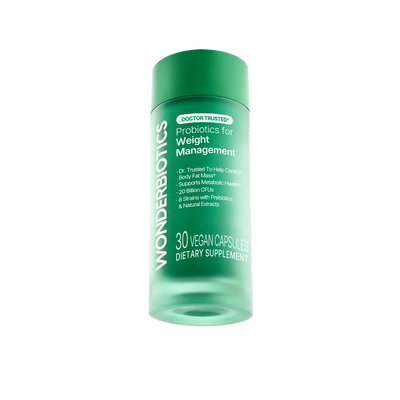
WONDERBIOTICS: A Formula That Addresses Multiple Dimensions
WONDERBIOTICS was formulated to address several appetite-relevant mechanisms simultaneously, rather than betting on a single pathway.
Eriomin® and CraveLock™: ingredient-level clinical research on natural GLP-1 secretion support. GLP-1 is the same gut hormone pathway that dietary fiber fermentation supports, approached through a botanical ingredient rather than through fiber viscosity. This is the formula's primary appetite awareness mechanism, supporting satiety signaling through nutritional GLP-1 pathway support.
5X Dihydroberberine: the formula's blood sugar stability ingredient, using the enhanced bioavailability form of berberine to address the insulin resistance and blood sugar fluctuation dimension of appetite. Not a berberine-free formula; a more effective delivery of the same metabolic mechanism. Discuss with your clinician if you take glucose-lowering medications.
B420™ (Bifidobacterium animalis subsp. lactis 420): the formula's gut-metabolic strain with ingredient-level RCT evidence on body fat management and reduced energy intake.3 The gut microbiome layer of appetite support, supporting the environment that GLP-1 and short-chain fatty acid production depend on.
HN019 (Bifidobacterium animalis subsp. lactis HN019): gut comfort and regularity support, addressing the GI dimension of a daily appetite support routine.
WONDERBIOTICS contains no stimulants. It is designed for consistent daily use as part of a weight management routine that includes adequate dietary protein, fiber-rich food intake, and regular physical activity.
WONDERBIOTICS uses PolarSeal Technology to protect the probiotic strains. In testing, 99.9% of the bacterial strain survived gut-like acidic conditions and 98.2% remained alive through the point of consumption. CFU is guaranteed at expiration.
Read the WONDERBIOTICS Review for a full look at the formula.
This article is for educational purposes only and is not medical advice. It is not intended to diagnose, treat, cure, or prevent any disease. If you have a medical condition or take medications, talk with a licensed clinician before starting supplements.
References
- National Institutes of Health, Office of Dietary Supplements. Dietary Supplements for Weight Loss: Health Professional Fact Sheet. Updated 2024. https://ods.od.nih.gov/factsheets/WeightLoss-HealthProfessional/
- Gout B, Bourges C, Paineau-Dubreuil S. Satiereal, a Crocus sativus L extract, reduces snacking and increases satiety in a randomized placebo-controlled study of mildly overweight, healthy women. Nutr Res. 2010;30(5):305-313. https://pubmed.ncbi.nlm.nih.gov/20579522/
- Stenman LK, Lehtinen MJ, Meland N, et al. Probiotic With or Without Fiber Controls Body Fat Mass, Associated With Serum Zonulin, in Overweight and Obese Adults-Randomized Controlled Trial. EBioMedicine. 2016;13:190-200. https://pubmed.ncbi.nlm.nih.gov/27810310/


