


Fiber, Probiotics, and Craving Support: What to Try Before Diet Pills

Fiber, Probiotics, and Craving Support: What to Try Before Diet Pills
Most people who reach for diet pills are trying to solve a hunger and cravings problem, not a metabolism problem. The distinction matters because the approaches that actually work for cravings target the biology driving them: blood sugar stability, gut hormone signaling, serotonin dynamics, and sleep, not stimulant-driven appetite suppression. This article covers what to try first, in order of evidence quality, including what the research says about fiber, saffron, chromium, probiotics, and how they compare to products marketed as diet pills.

What Makes Diet Pills Different (and Why That Matters)
Traditional stimulant-based diet pills suppress appetite through adrenergic mechanisms: caffeine, synephrine, and related compounds activate the sympathetic nervous system. The effect is real but temporary, comes with cardiovascular risks and tolerance buildup, disrupts sleep, and often creates rebound hunger. People who rely on stimulant appetite suppression long-term typically find that the approach stops working and leaves them in a worse metabolic state than before.
Prescription GLP-1 receptor agonists like semaglutide and tirzepatide are in a different category entirely: they are pharmaceutical agents prescribed for specific clinical indications, not supplements. They produce meaningful metabolic changes and are appropriate for qualifying patients under medical supervision. They are not in the "what to try" category without a clinical conversation.
What follows is what is available without a prescription, with honest evidence for each.
Start Here: Protein and Fiber from Food
Before any supplement, the two interventions with the most consistent evidence for cravings and satiety are dietary protein and dietary fiber, both of which are widely underconsumed.
Protein suppresses ghrelin more than equivalent calories from carbohydrates or fat, increases peptide YY and GLP-1 from the gut, and slows gastric emptying. Starting the day with 25-35 g of protein at breakfast reduces afternoon and evening cravings more reliably than any supplement studied at this effect size.
Dietary fiber, particularly soluble fiber from oats, legumes, and vegetables, slows glucose absorption, feeds gut bacteria that produce short-chain fatty acids, and stimulates GLP-1 and peptide YY from intestinal L-cells. The gut-appetite connection is real: the microbiome's fermentation of fiber is one of the primary inputs into the satiety hormone system.
These are not glamorous interventions. They also have stronger evidence than any supplement category below.
Supplements with the Most Relevant Evidence
Saffron Extract (Satiereal)
For mood-linked and stress-driven cravings specifically, saffron extract has the most directly relevant human RCT evidence. In a randomized, double-blind, placebo-controlled trial of 60 mildly overweight women over 8 weeks, saffron extract significantly reduced snacking frequency and produced a satiating effect compared to placebo.2 The proposed mechanism involves serotonin pathway support, which is relevant to the reward-seeking and emotional eating components of cravings.
Evidence classification: one RCT in mildly overweight women; single trial. Not a proven treatment for binge eating or clinical eating disorders. The evidence applies specifically to snacking behavior and mood-linked cravings, not to caloric intake reduction at a clinically significant scale.
Dietary Fiber Supplements
Beta-glucan from oats has consistent mechanistic evidence for satiety: it forms a viscous gel that slows gastric emptying, blunts glucose spikes, and stimulates GLP-1 from gut L-cells. The NIH Office of Dietary Supplements notes that beta-glucans may increase satiety and delay GI transit.1
Glucomannan is widely marketed for appetite control but the evidence is more limited. An 8-week placebo-controlled trial found glucomannan well-tolerated but without significant effects on weight, hunger, or fullness in overweight adults. The NIH ODS notes that glucomannan generally shows little to no effect on weight loss specifically as a standalone supplement.1 It remains a reasonable option for supporting regularity; expectations for direct appetite suppression should be modest.
Psyllium husk supports regularity and has modest evidence for satiety through its viscosity effects. It is better tolerated than highly fermentable fibers for people prone to bloating.
Chromium
Chromium picolinate is marketed for blood sugar regulation and carbohydrate cravings. The NIH ODS review notes that evidence for chromium's effects on weight loss is mixed with significant methodological limitations.1 Some small studies suggest modest reduction in carbohydrate-specific cravings in specific populations through effects on insulin signaling. The effect scope is narrow; it belongs at the margin of a cravings support routine, not at the center.
Green Tea Extract
May have a possible modest effect on body weight per NIH ODS review, but is associated with increasing evidence of liver damage at higher standardized EGCG doses.1 For people whose cravings have a stress or sleep component, adding a stimulant-containing supplement is counterproductive. Not recommended as a primary cravings support option.
Probiotics and Gut-Brain Signaling
Probiotics influence appetite through the gut-brain axis: short-chain fatty acid production stimulating GLP-1 and peptide YY, vagal nerve signaling from gut to hypothalamus, and effects on serotonin precursor metabolism. These mechanisms are real and relevant to cravings management, but the direct evidence for probiotics reducing subjective hunger in human trials is limited.
The more supportable framing is gut-environment support for the biological system that appetite signaling depends on. A probiotic that supports the microbiome's GLP-1 pathway and gut barrier integrity is contributing to the conditions that make satiety signaling more reliable.
Berberine and Dihydroberberine
Berberine has been studied for blood sugar, lipid metabolism, and insulin sensitivity. Cleveland Clinic notes that the evidence remains limited and being natural does not eliminate risk, particularly at higher doses. Dihydroberberine is a modified form with higher plasma berberine exposure at lower doses, reducing the GI side effects common with standard berberine while improving bioavailability. Its mechanism targets the blood sugar fluctuation component of reactive hunger through AMPK activation. If you take glucose-lowering medications, discuss adding any berberine-class compound with your clinician.
Terms to Know!
- GLP-1 (glucagon-like peptide-1): A gut-derived incretin hormone produced in response to food, involved in satiety signaling, slowing gastric emptying, and insulin release. Both dietary fiber fermentation and specific probiotic mechanisms support natural GLP-1 secretion.
- Short-chain fatty acids (SCFAs): Compounds produced when gut bacteria ferment dietary fiber. SCFAs stimulate GLP-1 and peptide YY from intestinal L-cells, directly connecting fiber intake and gut microbiome composition to appetite regulation.
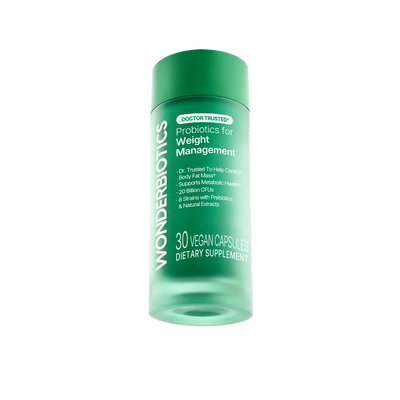
WONDERBIOTICS: The Non-Stimulant Gut-Metabolic Option
WONDERBIOTICS addresses cravings and appetite management through the gut-metabolic pathways described above, without stimulants and without making weight loss drug claims.
CraveLock™ and Eriomin® (lemon extract): ingredient-level clinical research on natural GLP-1 secretion support. This is the formula's approach to appetite awareness and food noise management: supporting the gut hormone pathway that signals satiety, through nutritional means rather than pharmaceutical action.
B420™ (Bifidobacterium animalis subsp. lactis 420): ingredient-level RCT evidence on body fat management and reduced energy intake in overweight adults. The metabolic core of the formula, supporting the gut-microbiome environment that influences body composition and appetite signaling.3
5X Dihydroberberine: an enhanced, more bioavailable form of berberine. Supports healthy blood sugar levels already within the normal range, addressing the blood sugar fluctuation component of reactive hunger. Not a berberine-free formula; a more effective form of the same pathway.
HN019 (Bifidobacterium animalis subsp. lactis HN019): gut comfort and regularity support. Relevant to the GI comfort dimension of a cravings support routine.
WONDERBIOTICS contains no stimulants, no caffeine, and no synephrine. It is designed for daily, long-term use as part of a weight management routine that includes adequate protein, fiber, and sleep.
WONDERBIOTICS uses PolarSeal Technology to protect the probiotic strains. In testing, 99.9% of the bacterial strain survived gut-like acidic conditions and 98.2% remained alive through the point of consumption. CFU is guaranteed at expiration.
Read the WONDERBIOTICS Review for a full look at the formula.
This article is for educational purposes only and is not medical advice. It is not intended to diagnose, treat, cure, or prevent any disease. If you experience significant cravings, have a medical condition, or take medications, talk with a licensed clinician before starting supplements.
References
- National Institutes of Health, Office of Dietary Supplements. Dietary Supplements for Weight Loss: Health Professional Fact Sheet. Updated 2024. https://ods.od.nih.gov/factsheets/WeightLoss-HealthProfessional/
- Gout B, Bourges C, Paineau-Dubreuil S. Satiereal, a Crocus sativus L extract, reduces snacking and increases satiety in a randomized placebo-controlled study of mildly overweight, healthy women. Nutr Res. 2010;30(5):305-313. https://pubmed.ncbi.nlm.nih.gov/20579522/
- Stenman LK, Lehtinen MJ, Meland N, et al. Probiotic With or Without Fiber Controls Body Fat Mass, Associated With Serum Zonulin, in Overweight and Obese Adults-Randomized Controlled Trial. EBioMedicine. 2016;13:190-200. https://pubmed.ncbi.nlm.nih.gov/27810310/


