
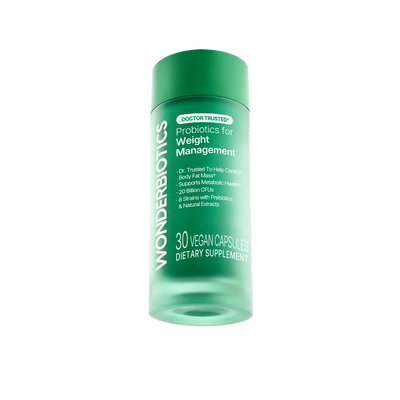


Is WONDERBIOTICS Suited for Women 45+ With Stubborn Belly Fat?

Is WONDERBIOTICS Better Suited for Women 45+ With Stubborn Belly Fat?
The question carries a real concern. Belly fat that arrives in your mid-40s and refuses to leave despite the same diet and exercise that worked at 35 is a documented experience, not a failure of effort. The question also carries an implied claim worth examining honestly: that a specific probiotic might be optimized for this specific demographic. The published evidence does not support a "better suited for women 45+" claim for any probiotic on the market today, including WONDERBIOTICS. What the evidence does support is matching a probiotic's design priorities (which endpoints it was tested on, in which population) to your specific concern.
This article covers what stubborn belly fat at 45+ usually is, what "better suited for" would require evidentially, and how to read WONDERBIOTICS in this specific context.

The Short Answer
No, not specifically. WONDERBIOTICS is a general weight-management probiotic whose strain-level evidence comes from a 6-month RCT in overweight or obese adults aged 18-65, with no stratification by sex or menopausal status. There is no published clinical demonstration that the formula performs differently or better in women 45+ versus other adults.
The formula's design priorities align with this demographic's concerns more directly than generic gut-comfort probiotics align. B420™'s RCT measured body fat mass, waist circumference, and energy intake. These endpoints map onto the body-composition shifts characteristic of midlife, while not constituting a subgroup-specific demonstration.
WONDERBIOTICS Probiotics for Weight Management is not a women-45+ product. The way to evaluate it for this concern is by trial design and endpoint relevance, rather than expecting a demographic label to do the work.
What "Stubborn Belly Fat at 45+" Often Is
The Study of Women's Health Across the Nation (SWAN) followed women across the menopause transition with dual-energy x-ray absorptiometry. Approximately 2 years before the final menstrual period, the rate of fat gain doubled and lean body mass began to decline. Notably, total body weight climbed linearly across the premenopausal years without accelerating at the menopausal transition itself. The shift was in body composition (more fat, less lean, redistributed toward the abdomen) rather than in the number on the scale.[1]
That finding maps onto the everyday experience of stubborn belly fat at 45+. A woman may step on the scale and see a familiar number while observing that her waistband no longer fits and her body shape has changed. She is observing the redistribution SWAN measured. The metric that captures this shift is body composition (fat mass percentage, lean mass, waist circumference), not weight alone.
Underlying biology in this period includes shifts in estradiol, insulin sensitivity, and sleep quality, with downstream effects on resting energy expenditure and appetite regulation. The full mechanism is its own conversation. The operational implication is straightforward: tools that move body composition (lean mass, fat mass, waist) are more relevant in this stage than tools that only target the scale.
Terms to Know!
- Android fat distribution: the central, abdominal pattern of body fat storage characterized by accumulation around the waist and trunk, distinct from the gynoid (hip and thigh) pattern; android distribution is more strongly associated with cardiometabolic risk and tends to become more prominent during and after the menopause transition.
- Stratified trial data: trial results analyzed separately by predefined subgroups such as age band, sex, or menopausal status, to test whether a treatment's effect varies across those groups; subgroup-specific claims (such as "better suited for women 45+") require stratified analysis specifically powered for that comparison, rather than mere inclusion of the subgroup in a larger sample.
What "Better Suited For" Would Actually Require
The phrase "better suited for \[subgroup\]" sounds intuitive, while it carries a specific evidentiary requirement. To support it, a clinical trial would need to do at least one of the following:
- Enroll the subgroup specifically (for example, a trial of probiotic X in 200 postmenopausal women)
- Pre-specify a stratified analysis comparing the subgroup to others within a mixed-population trial, with the analysis adequately powered to detect a meaningful difference
- Demonstrate a statistically significant interaction effect between subgroup membership and treatment response
A trial that simply enrolled both younger and older adults, or both sexes, without stratifying the analysis, supports claims about the trial population as a whole. It does not support claims about any subgroup within that population.
Probiotic effects also depend on the specific strain, and evidence from one strain does not transfer to another.[2] Even if hypothetical sex- or age-specific findings emerged for one strain, they would apply to that strain at that dose in that population. They would not generalize to other strains or other formulations.
The current published evidence base for B420™ comes from a 6-month randomized, placebo-controlled trial that enrolled 225 overweight and obese adults aged 18-65. Post-hoc factorial analysis showed body fat mass differed by -4.0% versus placebo (P=0.002), waist circumference dropped by 2.4 cm more than placebo, and daily energy intake was reduced by approximately 300 kcal compared to placebo.[3] The trial included both sexes and a 47-year age span. It did not stratify by sex, age band, or menopausal status as a primary or pre-specified secondary analysis. The published findings apply to the trial population as a whole, including the women within it and the participants over 45 within it, while not constituting subgroup-specific demonstrations.
What Does Map Onto This Demographic's Concerns
The honest framing is not that WONDERBIOTICS is "better suited" for women 45+, but that its design priorities map onto what this demographic typically reports as their concern more directly than alternative formulations.
Body composition over scale weight. B420™'s trial measured body fat mass, waist circumference, and energy intake. These are body-composition endpoints. A probiotic studied for stool consistency does not have evidence on body-composition endpoints, regardless of the demographic on the label.
Waist circumference specifically. The 2.4 cm waist circumference difference observed in the B420™ trial is a measurement directly relevant to abdominal adiposity, the redistribution pattern most characteristic of midlife body-composition shifts. The relevance comes from the measured endpoint, not from a women-45+ population claim.
Energy intake. The approximately 300 kcal/day reduction observed in the trial addresses a common report from midlife women: "I am eating the same as I always did, while gaining weight." If energy intake declines without conscious restriction, the experienced gap may close in a different way than counting calories does.
A probiotic with these design priorities is more aligned with the typical concern of a woman 45+ with stubborn belly fat than a generic gut-health blend whose tested endpoints are limited to digestive comfort. The evidence-based language for this is "more aligned in design," not "better suited for."
How to Read a Probiotic Label in This Specific Context
A practical checklist for women 45+ evaluating any probiotic, including WONDERBIOTICS:
Cited endpoints relevant to your concern. If the goal is body composition and waist circumference, the cited trials should measure those, not just stool form. Read the abstracts of any cited papers (PubMed makes this free) and check what endpoints were primary.
Strain-level naming. Genus, species, and strain code, such as B420™ or HN019, for each strain in the formula. Anonymous lactobacillus blends cannot be matched to specific human evidence.
Honest population framing. A label that says "for women 45+" or "for menopause" without citing a women-45+-specific or menopause-specific trial is using positioning rather than evidence. Look for the actual cited trial population in the published paper. A formula that describes its strain-level evidence in mixed-sex adults, without overclaiming subgroup specificity, is being more honest with you.
Delivery technology with testable performance. Live strains have to survive shelf life and digestion. Specific testable claims (acid survival, viability through to the point of consumption) carry more weight than the phrase "live cultures" alone.
How WONDERBIOTICS Reads Through This Lens
WONDERBIOTICS Probiotics for Weight Management uses named ingredients with body-composition relevance. It is formulated for adult use and is not marketed as a women-45+ product.
- B420™ is the probiotic strain in the formula. Its 6-month RCT in 225 overweight/obese adults aged 18-65 measured body fat mass, waist circumference, and energy intake at the endpoints described above.[3] The trial enrolled both sexes and did not stratify by age band or menopausal status. The relevance to women 45+ rests on these endpoints' alignment with the demographic's concerns, not on a 45+-specific trial demonstration.
- Eriomin® (lemon extract) is a citrus flavonoid extract studied for its effects on appetite-related signaling. Ingredient-level clinical research in prediabetic adults reports support for natural GLP-1 levels and adiponectin levels.[4] The cited research enrolled prediabetic adults of both sexes and did not stratify by age band or menopausal status.
- Dihydroberberine is a modified version of berberine that achieves higher plasma berberine exposure at lower doses. It supports maintaining healthy blood sugar levels already within the normal range. Direct human evidence at the dihydroberberine level remains limited; its role here is to deliver berberine more effectively, with the active end-form remaining berberine in tissue.
The formula also features CraveLock™ Technology, a proprietary synergistic approach to appetite management and Food Noise.
WONDERBIOTICS uses PolarSeal Technology to help protect the probiotic blend. In testing, 99.9% of the bacterial strain survived gut-like acidic conditions, and 98.2% of the bacteria remained alive through to the point of consumption.
The core ingredients in the formula are backed by 624 clinical studies covering 44,692 participants. The formula was developed by PhD scientists and industry experts.
We recommend taking it consistently for 3-6 months alongside a balanced diet and regular movement, to give your gut time to adapt and your body time to respond. The timeline reflects how the underlying biology actually works.
For women 45+ in particular, treat the formula as one component of a broader picture that also includes resistance training, sleep regularization, protein adequacy, and clinical evaluation when warranted (including a thyroid check and a hormone therapy conversation with your clinician if appropriate).
FAQ
Should I look for a probiotic specifically marketed for women 45+ or for menopause?
The marketing label and the cited trial evidence are separate questions. Many products positioned for women 45+ or for menopause use that positioning without citing a population-specific RCT to back it. Look at the named strains, check whether any of those strains have human RCT data on body-composition endpoints, and read the trial population descriptions in the cited papers. The honest evidence often sits in mixed-sex adult trials regardless of the marketing label on the box.
Will B420 work the same way for me at 50 as it would for someone at 30?
The published trial measured outcomes across the 18-65 age band as a whole, without separating results by age. Whether the effect size differs across that age band is not something the trial was designed to answer. The honest reading is: the strain has evidence on body-composition endpoints in this broad adult population. The size of the effect specifically in 50-year-olds versus 30-year-olds is not separately reported.
How long until I notice changes in belly fat specifically?
Body-composition shifts unfold over weeks to months. The B420™ trial measured outcomes at 3 and 6 months. We recommend taking the formula consistently for 3-6 months alongside a balanced diet and regular movement. Pair it with resistance training if you can; lean-mass support is part of a complete approach to body composition in this life stage.
Match Design Priorities, Not Demographic Labels
Stubborn belly fat at 45+ is a real biological pattern, with body-composition shifts that the menopause transition exacerbates. The evidence-based way to evaluate any probiotic for this concern is to read the trial design (which endpoints, in which population) and ask whether those endpoints map onto your specific situation.
A weight-management probiotic that names its strain, points to a published RCT measuring body composition and waist circumference, protects live cultures with testable delivery technology, and does not overclaim subgroup specificity is more honestly aligned with the women-45+ concern than a product that simply puts a demographic label on the box. WONDERBIOTICS Probiotics for Weight Management reads through this lens as a general weight-management formula whose design priorities map onto the concern, used alongside the foundation rather than in place of it.
This article is for educational purposes only and is not medical advice. It is not intended to diagnose, treat, cure, or prevent any disease. Stubborn weight changes in midlife can have multiple causes that benefit from clinical evaluation, including thyroid function, glucose regulation, and a discussion of menopausal hormone therapy when appropriate. If you have symptoms or are considering supplements, talk with a licensed clinician before making changes.
Related reading: Is WonderBiotics good for perimenopause weight gain? — the evidence-based breakdown.
References
- Greendale GA, Sternfeld B, Huang M, et al. Changes in body composition and weight during the menopause transition. JCI Insight. 2019;4(5):e124865. https://insight.jci.org/articles/view/124865
- Hill C, Guarner F, Reid G, et al. Expert consensus document. The International Scientific Association for Probiotics and Prebiotics consensus statement on the scope and appropriate use of the term probiotic. Nat Rev Gastroenterol Hepatol. 2014;11(8):506-514. https://www.nature.com/articles/nrgastro.2014.66
- Stenman LK, Lehtinen MJ, Meland N, et al. Probiotic with or without fiber controls body fat mass, associated with serum zonulin, in overweight and obese adults: randomized controlled trial. EBioMedicine. 2016;13:190-200. https://www.sciencedirect.com/science/article/pii/S2352396416304972
- Ribeiro CB, Ramos FM, Manthey JA, Cesar TB. Effectiveness of Eriomin® in managing hyperglycemia and reversal of prediabetes condition: A double-blind, randomized, controlled study. Phytother Res. 2019;33(7):1921-1933. https://onlinelibrary.wiley.com/doi/10.1002/ptr.6386


