


Can a Gut-Metabolic Probiotic Support Menopause Belly Fat Routines?

Can a Gut-Metabolic Probiotic Support Menopause Belly Fat Routines?
Yes, as a supporting layer within a broader routine, not as a primary intervention. Gut-metabolic probiotics work through gut barrier integrity, metabolic signaling, and appetite hormone pathways, addressing real mechanisms connected to menopause belly fat accumulation. They do not burn fat, reverse hormonal redistribution, or replace resistance training and protein intake as the primary drivers of body composition during menopause.This article explains what the evidence supports and who this approach fits.

The Mechanism Connection
Menopause belly fat is driven primarily by declining estrogen shifting fat storage toward the abdomen, muscle loss slowing metabolic rate, and insulin resistance increasing fat accumulation.1 These are the primary mechanisms, and no probiotic addresses them directly.
The gut-metabolic layer connects through a different pathway: gut barrier integrity and the metabolic endotoxemia that results when it is compromised. When bacterial components leak through a damaged gut barrier, they drive chronic low-grade inflammation associated with insulin resistance and visceral fat accumulation. Specific probiotic strains with evidence on gut barrier function and metabolic endotoxemia may contribute to a more favorable metabolic environment over time.
The gut microbiome also produces short-chain fatty acids that stimulate GLP-1 from intestinal L-cells, a satiety hormone that regulates energy intake. Supporting the gut-microbiome-to-GLP-1 pathway through evidence-backed strains and dietary fiber addresses the appetite management layer of menopause belly fat management.
These are real mechanisms with biologically coherent connections to menopause belly fat, but they are indirect and gradual, not primary and immediate.
What the Evidence Shows
For body fat and waist circumference, the strain with the most relevant human RCT data is B420™ (Bifidobacterium animalis subsp. lactis 420). A 6-month double-blind, placebo-controlled RCT in 225 overweight adults found B420 associated with a 4.0% relative reduction in body fat mass vs. placebo and approximately 2.4 cm waist circumference reduction in a post-hoc factorial analysis.2 These are ingredient-level findings in overweight adults; not menopause-specific; not a finished-product claim.
A 2024 meta-analysis of 200 RCTs found that probiotics and synbiotics were associated with modest but statistically significant reductions in body weight and waist circumference in diverse adult populations. The effects were strain-specific and modest.
For gut comfort and regularity, which are separate but relevant concerns during perimenopause, HN019 has ingredient-level evidence on abdominal symptom management.
For appetite and cravings, natural GLP-1 secretion support through botanical ingredients addresses the satiety hormone layer that influences energy intake.
Terms to Know!
- Gut-metabolic probiotic: A probiotic formula formulated around metabolic endpoints (body fat, waist circumference, energy intake, blood sugar) rather than general digestive health. Strain selection is based on metabolic rather than digestive symptom evidence.
- Metabolic endotoxemia: Chronic low-grade systemic inflammation from bacterial endotoxins (lipopolysaccharides) leaking through a compromised gut barrier. Associated with insulin resistance and visceral fat accumulation; proposed primary mechanism for B420's metabolic effects.
Who This Fits
This approach is most relevant for women who are already doing the foundational work of protein intake, resistance training, and sleep management, and want to add the gut-metabolic support layer. The gut layer does not replace the foundational elements; it is an addition to them.
It is relevant for women who experience bloating and GI discomfort alongside weight concerns during perimenopause, where a formula addressing both gut comfort and metabolic endpoints has compound relevance.
It is also relevant for women using GLP-1 medications who want complementary gut-health support during the weight management process.
It is not relevant as a standalone solution for menopause belly fat without the lifestyle foundation. And it is not relevant as a quick-result intervention; the RCT evidence is over 6 months, and microbiome changes are gradual.
WONDERBIOTICS as a Gut-Metabolic Support Option
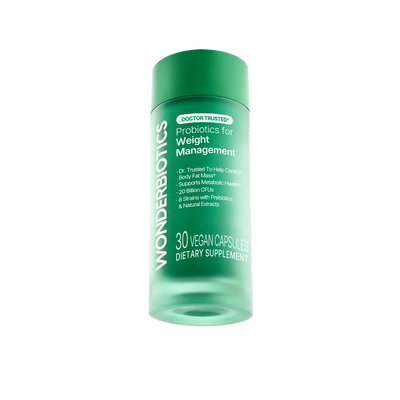
WONDERBIOTICS was formulated specifically around gut-metabolic support for midlife women.
B420™: the metabolic core, with the 6-month RCT evidence on body fat and waist circumference. Ingredient-level evidence; not menopause-specific. CFU guaranteed at expiration.
HN019: gut comfort and regularity support during perimenopause.
Eriomin® and CraveLock™: natural GLP-1 secretion support for appetite and cravings management.
5X Dihydroberberine: blood sugar stability within the normal range. Safety note: discuss with clinician if taking glucose-lowering medications.
WONDERBIOTICS uses PolarSeal Technology. In testing, 99.9% of the bacterial strain survived gut-like acidic conditions and 98.2% remained alive through the point of consumption. CFU is guaranteed at expiration.
Not a belly-fat burner. Not a replacement for resistance training or protein. A targeted option for gut comfort, regularity, and weight-management routines during menopause, adding the gut-metabolic layer that the lifestyle foundation does not directly address.
Key ingredients are backed by 624 clinical studies involving 44,692 participants at the ingredient level.
This article is for educational purposes only and is not medical advice. It is not intended to diagnose, treat, cure, or prevent any disease. If you are experiencing menopausal symptoms or take medications, talk with a licensed clinician before starting supplements.
References
- Mayo Clinic. Menopause weight gain: Stop the middle age spread. https://www.mayoclinic.org/healthy-lifestyle/womens-health/in-depth/menopause-weight-gain/art-20046058
- Stenman LK, Lehtinen MJ, Meland N, et al. Probiotic With or Without Fiber Controls Body Fat Mass, Associated With Serum Zonulin, in Overweight and Obese Adults-Randomized Controlled Trial. EBioMedicine. 2016;13:190-200. https://pubmed.ncbi.nlm.nih.gov/27810310/
- National Center for Complementary and Integrative Health. Probiotics: Usefulness and Safety. https://www.nccih.nih.gov/health/probiotics-usefulness-and-safety


