


Does a Probiotic Help With Appetite Control?

Does Probiotic Help With Appetite Control?
If you're asking whether a probiotic supplement can help quiet hunger and cravings, the short answer is: the gut-brain connection is real and well-documented, but the supplement evidence is more modest and more strain-specific than the category-level marketing suggests. This article walks through the biology, the actual published evidence, and how to think about whether a probiotic fits your situation without overpromising or dismissing the category.

Yes, But...
Probiotics can play a supporting role in appetite control. They are not a switch you flip.
The honest summary:
- The biological mechanism is real: gut microbes influence hormones like GLP-1, PYY, and leptin that regulate appetite
- Category-level evidence is mixed and modest: meta-analyses show favorable shifts in some hormones but not consistent improvements in subjective hunger
- Strain-level evidence is more useful: specific named strains have published RCT data on appetite-related endpoints
- Time scale is weeks-to-months, not minutes-to-days
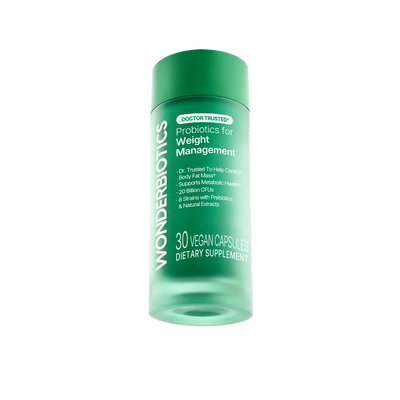
WONDERBIOTICS Probiotics for Weight Management is one strain-level option built around B420™, a strain with published human evidence on daily energy intake.
How the Gut Influences Appetite
The connection between the gut and appetite runs through several biological pathways that operate together.
Gut hormones. The intestinal lining contains cells that release hormones in response to food and microbial activity. GLP-1, peptide YY (PYY), and cholecystokinin (CCK) all signal satiety to the brain. Ghrelin signals hunger. The balance among these hormones shapes how hungry or full you feel.
Short-chain fatty acids (SCFAs). When gut bacteria ferment dietary fiber, they produce SCFAs (butyrate, propionate, acetate). These compounds can stimulate GLP-1 and PYY release from intestinal cells, and they may signal directly to the brain through vagal nerve pathways. The amount and type of SCFAs produced depend partly on the bacteria present.
The gut-brain axis. The vagus nerve, hormonal signals, and inflammatory markers form a two-way communication channel between gut and brain. Disruptions in gut microbiome composition have been associated with metabolic dysregulation, including changes in appetite signaling, energy balance, and insulin sensitivity.[1]
This is the biological foundation. The supplement industry sometimes presents it as if planting any probiotic into this system automatically improves appetite control, which is a leap the evidence does not directly support.
Terms to Know!
- Gut-brain axis: the two-way communication network between the gastrointestinal tract and the central nervous system, involving the vagus nerve, hormones, immune signals, and microbial metabolites; appetite regulation is one of its key outputs.
- Short-chain fatty acid (SCFA): compounds like butyrate, propionate, and acetate produced when gut bacteria ferment dietary fiber; they can influence appetite by stimulating satiety hormones and signaling to the brain through vagal pathways.
What the Published Evidence Actually Shows
The relevant question is not "do probiotics help with appetite control at the category level," but "which specific strains, at what doses, in what populations, have shown what effects on what endpoints."
Category-level meta-analysis: mixed signals
A 2023 systematic review and meta-analysis covered 26 randomized controlled trials with 1,536 participants, examining probiotic and synbiotic supplementation against appetite-regulating hormones and self-reported desire to eat. The pooled analysis showed:
- Significant decrease in serum leptin (standardized mean difference -0.38), which can shift appetite signaling in a favorable direction
- Trending increase in adiponectin, also favorable for metabolic and appetite regulation
- Slight statistically significant increase in self-reported desire to eat (SMD 0.34, P=0.030) at the category level
- Substantial heterogeneity across trials[2]
The honest reading: hormonal markers move in a direction associated with better appetite regulation; the subjective experience of wanting to eat moves slightly in the opposite direction at the pooled category level. The findings are not contradictory; they reflect the gap between biomarker changes and felt experience, and they reflect that different strains in different populations produce different results.
Strain-level evidence: more useful
Probiotic effects depend on the specific strain, and evidence from one strain does not transfer to another.[3] This is the core principle for reading any probiotic claim. The strains with published human RCT data on appetite-related endpoints include:
B420™ (Bifidobacterium animalis subsp. lactis 420): In a 6-month randomized, placebo-controlled trial in 225 overweight and obese adults, daily energy intake in the B420™ group was reduced by approximately 300 kcal/day compared to placebo, and the post-hoc factorial analysis showed body fat mass differed by -4.0% versus placebo (P=0.002). The pre-specified primary outcome in the intention-to-treat population did not reach significance.[4]
Other strains with published appetite-relevant data include Hafnia alvei HA4597® (increased fullness ratings during hypocaloric diet) and Lactobacillus rhamnosus CGMCC 1.3724 (sex-specific weight and appetite effects). The evidence is real but specific, and effect sizes are modest.
What Probiotics Do Not Do
To match expectation to evidence, three boundaries matter.
Probiotics do not work as acute appetite suppressants. The mechanism unfolds over weeks to months as the gut ecosystem adjusts. A probiotic taken before a meal will not reduce that specific meal's intake the way a stimulant or a fiber preload might.
Probiotics do not override the persistent biology of dieting. Restriction-based weight loss triggers hormonal adaptations that increase hunger and decrease fullness signals, and these adaptations can persist for at least a year after weight loss.[5] Probiotics can support gut-microbiome-mediated signaling, but they do not reverse the body's defense of its energy stores.
Probiotic effects are not universal across the category. The label "probiotic" covers thousands of products with different strains, doses, and design intents. A digestive-comfort blend was not formulated for appetite, and even a weight-targeted formula varies in evidence depth depending on the specific strains it uses.
How WONDERBIOTICS Fits This Picture
WONDERBIOTICS Probiotics for Weight Management is one strain-level example built around named ingredients with defined roles.
- B420™ is the probiotic strain in the formula, with the 6-month RCT in overweight/obese adults providing ingredient-level human evidence on body composition and energy intake. The data sits at the ingredient-level human evidence tier; the finished WONDERBIOTICS product has not been tested in a head-to-head trial in WONDERBIOTICS users specifically.
- Eriomin® (lemon extract) is a citrus flavonoid extract studied for its effects on appetite-related signaling. Ingredient-level clinical research in prediabetic adults reports support for natural GLP-1 levels and adiponectin levels. Ingredient-level results in a specific population, not finished-product results in WONDERBIOTICS users.
- Dihydroberberine is a modified version of berberine that achieves higher plasma berberine exposure at lower doses. It supports maintaining healthy blood sugar levels already within the normal range. Direct human evidence at the dihydroberberine level remains limited; its role here is to deliver berberine more effectively, with the active end-form remaining berberine in tissue.
The formula also features CraveLock™ Technology, a proprietary synergistic approach to appetite management and Food Noise.
WONDERBIOTICS uses PolarSeal Technology to help protect the probiotic blend. In testing, 99.9% of the bacterial strain survived gut-like acidic conditions, and 98.2% of the bacteria remained alive through to the point of consumption.
The core ingredients in the formula are backed by 624 clinical studies covering 44,692 participants. The formula was developed by PhD scientists and industry experts.
We recommend taking it consistently for 3-6 months alongside a balanced diet and regular movement, to give your gut time to adapt and your body time to respond.
FAQ
How long before I notice a difference?
Probiotic effects on appetite biology unfold over weeks. We recommend at least 3-6 months of consistent use, paired with a balanced diet and regular movement. Rapid changes in either direction are not realistic with this category.
Will any probiotic help with appetite, or do I need a specific one?
A specific one. Probiotic effects are strain-specific. A general digestive-comfort blend without named strains tested for appetite-related endpoints cannot reasonably claim those effects. Look for named strain identifiers (B420™, HN019, GG, CGMCC 1.3724) and published RCT data on the endpoint you care about.
Can I get the same benefit from yogurt or fermented foods?
Yogurt and fermented foods contain live cultures and are good for general gut health, but they typically do not contain the specific strains at the specific doses used in weight-management RCTs. They are complementary to a targeted formula rather than a substitute.
Are there side effects?
Most healthy adults tolerate probiotics well. Some people experience mild bloating or gas during the first 1-2 weeks as their gut adjusts. People with compromised immune systems, recent major surgery, or serious underlying conditions should talk with a clinician before starting any probiotic.
Realistic Expectations, Real Biology
A probiotic can be a useful component of an appetite-control approach, when it contains a named, deposited strain with published human RCT data on a relevant endpoint, paired with realistic time frames and the recognition that gut-microbiome-mediated signaling is one layer of appetite biology rather than the whole story.
For a probiotic formulated around the named strain B420™ with strain-level human evidence on daily energy intake, WONDERBIOTICS Probiotics for Weight Management is one option built on that logic.
References
- Fan Y, Pedersen O. Gut microbiota in human metabolic health and disease. Nat Rev Microbiol. 2021;19(1):55-71. https://www.nature.com/articles/s41579-020-0433-9
- Noormohammadi M, Ghorbani Z, Löber U, et al. The effect of probiotic and synbiotic supplementation on appetite-regulating hormones and desire to eat: a systematic review and meta-analysis of clinical trials. Pharmacol Res. 2023;187:106614. https://www.sciencedirect.com/science/article/pii/S1043661822005606
- Hill C, Guarner F, Reid G, et al. Expert consensus document. The International Scientific Association for Probiotics and Prebiotics consensus statement on the scope and appropriate use of the term probiotic. Nat Rev Gastroenterol Hepatol. 2014;11(8):506-514. https://www.nature.com/articles/nrgastro.2014.66
- Stenman LK, Lehtinen MJ, Meland N, et al. Probiotic with or without fiber controls body fat mass, associated with serum zonulin, in overweight and obese adults: randomized controlled trial. EBioMedicine. 2016;13:190-200. https://www.sciencedirect.com/science/article/pii/S2352396416304972
- Sumithran P, Prendergast LA, Delbridge E, et al. Long-term persistence of hormonal adaptations to weight loss. N Engl J Med. 2011;365(17):1597-1604. https://www.nejm.org/doi/full/10.1056/NEJMoa1105816


