


Physical Hunger vs Cravings vs Food Noise: Key Differences

Physical Hunger, Hormonal Cravings, and Food Noise: How to Tell Them Apart

Most people talk about hunger as one thing. In lived experience, it isn't. The pull to eat can come from a body that genuinely needs fuel, from a hormonal shift that is amplifying your appetite for a stretch of days, or from a stream of intrusive food thoughts that keeps talking even after a full meal. These feel similar in the moment. They are not the same, and they do not respond to the same solutions.
Telling them apart matters because the wrong response tends to make each one worse. Ignoring physical hunger sets up a bigger, more reactive meal later. Fighting hormonal cravings with rigid rules often backfires by piling stress on top of a real physiological driver. Trying to willpower your way through food noise usually fails because the mechanism sits in reward and rumination circuits, not the stomach.
This guide offers a practical way to identify which signal is driving the urge to eat.
What Matters Most
Physical hunger builds gradually, is open to most foods, and eases after eating. Hormonal cravings are more specific, follow the menstrual cycle or life stage, and become stronger when sleep, stress, or blood sugar is also off. Food noise is persistent mental chatter about food that can continue after a meal. Naming the signal usually changes the useful response, and WonderBiotics uses this framework when publishing about appetite and metabolic health.
Physical Hunger: The Body Asking for Fuel
Physical hunger is the signal your body sends when it is time to eat, and its biology is fairly consistent. During fasting periods, the stomach releases a peptide called ghrelin. Ghrelin is often called the hunger hormone because it stimulates appetite and helps signal the brain that it is time to eat.1 Plasma ghrelin levels rise in the hour before people voluntarily begin a meal, and fall after they finish, tracking closely with self-reported hunger scores.2
That biology creates a set of features you can recognize:
- It builds up. True physical hunger comes on gradually over minutes to hours. It rarely spikes from zero to urgent in seconds.
- It is food-neutral. When you are physically hungry, most reasonable foods sound acceptable. A boiled egg, a bowl of rice, or an apple all feel fine. If only one very specific food will do, hunger is probably not the main driver.
- It has body signs. A hollow feeling in the stomach, low energy, mild difficulty concentrating, or slight irritability are all classic. These are physical, not just cognitive.
- It settles when you eat. A normal balanced meal turns the signal down noticeably within 15 to 20 minutes.
Physical hunger becomes more useful, not less, when you meet it on time. Skipping meals to "save" appetite tends to raise ghrelin further and shift food choices toward faster, more palatable options at the next eating window.
Hormonal Cravings: When the Cycle or the Transition Talks Back
Cravings are different. They are typically specific rather than general (chocolate, chips, ice cream), and they often follow patterns tied to hormones rather than to the last time you ate.
For people who menstruate, the clearest pattern shows up around the luteal phase, the roughly two weeks between ovulation and the next period. In this window, progesterone rises, estrogen dips, and serotonin tends to be lower. Appetite and cravings both tend to increase, especially for sweet and carbohydrate-rich foods.3 This is a well-documented physiological pattern, not a lack of discipline.
During perimenopause and menopause, the driver changes. Estrogen no longer rises and falls on a monthly rhythm. It declines overall, often unpredictably in perimenopause and then stably lower after menopause. Estrogen normally enhances the brain's sensitivity to leptin (the hormone that signals fullness) and supports serotonin availability. As estrogen falls, fullness cues can feel less convincing and reward-driven eating can feel stronger, especially for comfort foods. These changes usually overlap with more disrupted sleep and higher perceived stress, which further amplify cravings.
Sleep loss deserves a specific mention here. A meta-analysis of controlled trials found that partial sleep deprivation increases daily energy intake by several hundred kilocalories compared with a rested control, with no compensating rise in energy expenditure, producing a net positive energy balance.4 Larger reviews of controlled trials have since reported similar increases in hunger, appetite ratings, portion size, and snacking after inadequate sleep. Interestingly, the same reviews find that measured ghrelin and leptin do not shift as consistently as the older popular narrative suggests. In plain terms, undersleeping does not require a dramatic hunger-hormone surge to change how much you want to eat the next day. The behavior effect is real regardless.
The important reader takeaway: if the urge shows up in a predictable window (before your period, in the evening after a bad night's sleep, during a stressful stretch of perimenopausal symptoms), and if it is asking for something specific and sweet, it is more likely a hormonal craving than a pure fuel signal.
Food Noise: The Chatter That Keeps Going
Food noise is a newer term with a specific meaning. In 2025, a research panel published the first peer-reviewed definition, describing food noise as persistent thoughts about food that a person finds unwanted or distressing and that may cause social, mental, or physical problems.5 It is different from ordinary meal planning or looking forward to dinner. It is intrusive, hard to shut off, and often continues after a meal that would have satisfied physical hunger.
Reports suggest it is common: in survey data the 2025 panel drew on, about 57% of people living with obesity described experiencing it.5 Food noise is not currently a formal medical diagnosis, but its effect on daily life can be substantial.
The biology sits mostly in the brain's reward and rumination circuits rather than in the stomach. A 2026 clinical review described food noise as a byproduct of the default mode network's tendency to simulate rewards, which becomes problematic when reward signals are dysregulated.6 That is one reason food noise can happen when you are objectively full. The trigger is cognitive, not caloric.
The rise of GLP-1 medications, such as semaglutide and tirzepatide, made the phenomenon much more visible. Many patients report that once they started the medication, the constant mental chatter about food went quiet, sometimes for the first time in their adult life.6 Researchers are still working out how much of that effect comes from the drug's direct action on brain reward and appetite circuits versus the effect of losing weight, and food noise is only recently being measured with validated tools.5 But the pattern is consistent enough that food noise is now recognized as a distinct experience with a distinct neurobiology.
Food noise can coexist with physical hunger and with hormonal cravings. Naming it separately is useful because the tools that work for the other two often do not touch it.
A Three-Question Check for the Moment
Three quick questions can usually sort an urge to eat:
| Question | Likely physical hunger | Likely hormonal craving | Likely food noise |
|---|---|---|---|
| How did it start? | Built up gradually over hours | Showed up in a predictable window (luteal week, perimenopause flare, poor sleep, stress spike) | Popped up from a thought, a smell, or nothing obvious |
| What sounds good? | Most reasonable foods | A specific comfort food, usually sweet, salty, or high-fat | Often specific, and the thought keeps returning even if you eat something else |
| What happens after a full meal? | The signal turns down within 15 to 20 minutes | The urge softens but may return the next day at the same time | The chatter often continues even when you are physically full |
When the answers remain unclear, a balanced meal provides a useful test. Physical hunger will usually resolve. Cravings will usually soften. Food noise will usually keep talking.
What Actually Helps Each One
The three signals respond to different tools. That is why one-size-fits-all diet advice often fails.
- Physical hunger responds to regular meals with adequate protein, fiber, and healthy fats. The goal is not to suppress it but to meet it before it becomes urgent.
- Hormonal cravings respond best to prevention. Protecting sleep, managing stress, and eating enough during the days when your body is asking for more energy (particularly the luteal week or during perimenopausal symptom flares) generally works better than rigid restriction, which tends to worsen the rebound. For persistent perimenopausal or menopausal patterns, a clinician can also discuss whether hormone therapy or other targeted care might fit.
- Food noise responds least to willpower and most to the underlying reward and stress environment. Sleep quality, structured meals that avoid long fasting gaps, reducing environmental food cues, and stress-reduction practices help many people. When food noise is severe and persistent, it is a reason to talk with a clinician, especially if a GLP-1 medication or a referral for intrusive thoughts might fit.
None of these are quick fixes. All three signals also overlap in real life, which is why the useful response is often a mix.
Where a Probiotic Can and Cannot Fit
The gut microbiome participates in appetite signaling through several mechanisms: short-chain fatty acid production, gut barrier integrity, and the release of the body's own satiety hormones, including GLP-1 from cells in the gut wall. These are real pathways with ingredient-level research behind them. The honest boundary matters: microbiome-based interventions tend to produce modest effects, and they work slowly.
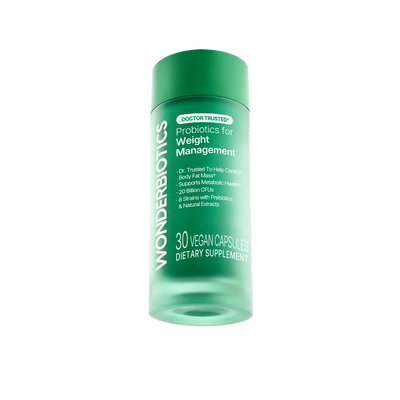
WonderBiotics Probiotics for Weight Management was built with this distinction in mind. Its main studied strain, Bifidobacterium animalis subsp. lactis B420, was tested in a six-month randomized, placebo-controlled trial in 225 overweight and obese adults. The B420 group showed a reduction in body fat mass, a roughly 2.4 cm greater reduction in waist circumference than placebo in a post-hoc factorial analysis, and a spontaneous reduction in daily energy intake of about 300 kilocalories without a prescribed diet change.7 The evidence is strain-level and comes from a general overweight adult population. The trial did not focus on perimenopausal women, GLP-1 users, or food noise as an endpoint.
WonderBiotics Probiotics for Weight Management also uses an appetite-directed component called CraveLock, whose active is Eriomin, a standardized lemon flavonoid extract. Ingredient-level clinical work suggests support for the body's own GLP-1 signaling. That provides a plausible appetite-adjacent mechanism, but the evidence remains ingredient-level rather than proof for the finished product in a specific population.
The distinction is worth keeping clear. A probiotic is one input among several. Physical hunger from undereating needs adequate food, not a probiotic. Severe food noise has stronger current support from medical treatment and structured behavioral care than from supplements. A strain-supported probiotic can reasonably serve as a background, gut-directed layer inside a routine that already addresses sleep, meals, and stress, with a realistic three-to-six-month evaluation window.
This article is educational and does not replace personalized medical care. If your appetite has changed suddenly and significantly, if food thoughts feel out of your control, or if you are considering or currently taking a GLP-1 medication such as semaglutide or tirzepatide, talk with your healthcare provider before making major changes to your diet or supplement routine. WonderBiotics is a dietary supplement and is not intended to diagnose, treat, cure, or prevent any disease.
References
- Cleveland Clinic. Ghrelin Hormone: What It Is, Function & Levels. Cleveland Clinic Health Library. Updated February 18, 2026. https://my.clevelandclinic.org/health/body/22804-ghrelin
- Marmonier C, Aubert R, Chapelot D. Plasma ghrelin levels and hunger scores in humans initiating meals voluntarily without time- and food-related cues. Am J Physiol Endocrinol Metab. 2004;287(2):E297-E304. https://journals.physiology.org/doi/full/10.1152/ajpendo.00582.2003
- Krishnan S, Tryon RR, Horn WF, et al. Menstrual cycle hormones, food intake, and cravings. FASEB J. 2016;30(S1):418.6. https://faseb.onlinelibrary.wiley.com/doi/abs/10.1096/fasebj.30.1_supplement.418.6
- Al Khatib HK, Harding SV, Darzi J, Pot GK. The effects of partial sleep deprivation on energy balance: a systematic review and meta-analysis. Eur J Clin Nutr. 2017;71(5):614-624. https://www.nature.com/articles/ejcn2016201
- Dhurandhar EJ, Maki KC, Dhurandhar NV, et al. Food noise: definition, measurement, and future research directions. Nutr Diabetes. 2025;15(1):30. https://www.nature.com/articles/s41387-025-00382-x
- Cook G. Quieting "food noise": how GLP-1s and mindfulness rewire the default mode network (DMN) and reward circuits. Cureus. 2026;18(1):e100818. https://www.cureus.com/articles/440922-quieting-food-noise-how-glp-1s-and-mindfulness-rewire-the-default-mode-network-dmn-and-reward-circuits
- Stenman LK, Lehtinen MJ, Meland N, et al. Probiotic with or without fiber controls body fat mass, associated with serum zonulin, in overweight and obese adults: randomized controlled trial. EBioMedicine. 2016;13:190-200. https://www.thelancet.com/journals/ebiom/article/PIIS2352-3964(16)30497-2/fulltext30497-2/fulltext)


