


Appetite Control Supplements for Food Noise: What Helps

Appetite Control Supplements and Food Noise: What Actually Helps Quiet the Mind
Food noise, the persistent intrusive thinking about food, responds better to consistent appetite signaling support than to willpower alone, and certain non-stimulant supplement strategies are gaining clinical attention for this specific purpose.

What Food Noise Really Is
Food noise refers to the constant mental chatter about eating. It includes thinking about your next meal while still eating, planning snacks hours in advance, and feeling unable to stop mentally cataloging foods even when you are full. Unlike physical hunger, food noise is cognitive and persistent. It drains attention and makes portion management feel like a daily battle.
Researchers studying appetite regulation now recognize that food noise reflects disrupted satiety signaling rather than weak discipline. When satiety hormones such as GLP-1, PYY, and leptin communicate effectively, the brain receives clear "enough" signals. When that signaling falters, the brain keeps requesting food-related attention even after adequate intake.1
The distinction matters because it reframes the solution. Appetite control supplements for food noise work by supporting the signaling pathways that tell the brain the body has been fed, rather than by suppressing appetite through stimulation.
Why Non-GLP-1 Options Are Drawing Interest
GLP-1 receptor agonists have dominated recent conversations about appetite and food noise. These medications amplify GLP-1 signaling, which reduces appetite and caloric intake, and secondarily delays gastric emptying.2 The FDA has confirmed that the weight loss associated with semaglutide comes primarily from reduced appetite and caloric intake.
However, GLP-1 medications are not accessible or appropriate for everyone. Cost, supply shortages, side effects, and medical contraindications lead many adults to seek non-GLP-1 approaches to appetite management. This is where appetite control supplements for food noise enter the conversation.
The goal with non-GLP-1 supplement strategies is not to mimic medication. It is to support the body's own satiety signaling through ingredients that have been studied for their effects on appetite-related pathways.
Key Ingredients Being Studied for Food Noise and Appetite
Several ingredient categories have clinical research behind their relationship to appetite signaling. Understanding what the evidence actually shows helps separate marketing claims from meaningful support.
Lemon Fruit Extract (Eriomin)
Eriomin is a standardized lemon fruit extract studied for its relationship to endogenous GLP-1. Ingredient-level research has examined its effects on GLP-1 stimulation, and while ingredient evidence does not equal finished product evidence, the data supports its role in natural GLP-1 support.3 For food noise specifically, supporting the body's own GLP-1 signaling is one mechanism worth considering.
Probiotic Strains for Appetite Regulation
The gut microbiome communicates with the brain through multiple channels, including the gut-brain axis, short-chain fatty acid production, and hormone signaling. Specific probiotic strains have been studied for their relationship to body fat management and appetite.
The B420 strain, for example, was evaluated in a 6-month randomized controlled trial with 225 overweight adults aged 18 to 65. The trial examined its effects on body fat management.4 While this is ingredient-level data and not a food noise study per se, the connection between metabolic regulation and appetite signaling is an active area of research.
Berberine and Bioavailability
Berberine has been studied for metabolic support, but standard berberine has limited absorption. Dihydroberberine offers a more bioavailable delivery route, which may be relevant for sustained metabolic and appetite support.5 Better bioavailability means more consistent signaling support, which matters when the goal is quieting persistent food thoughts throughout the day.
How Appetite Signaling Connects to Food Noise
To understand why appetite control supplements might help with food noise, it helps to follow the signaling chain.
1. Hormonal signals such as GLP-1, PYY, and CCK are released in response to food intake
2. The vagus nerve carries these signals from the gut to the brainstem
3. The hypothalamus integrates the signals and adjusts appetite-related behavior
4. The prefrontal cortex receives input about satiety status and can redirect attention away from food
When any step in this chain underperforms, food noise can persist even after adequate eating. Supplements that support gut hormone signaling, vagal communication, or microbiome balance may help normalize this process over time.
Terms to Know
Food noise: Persistent, intrusive cognitive focus on food, eating, and snacks that continues regardless of physical hunger status.
Endogenous GLP-1: GLP-1 produced naturally by the body, primarily in the gut, in response to food intake. This differs from pharmaceutical GLP-1 receptor agonists.
What a Non-GLP-1 Supplement Strategy Looks Like
Building a supplement approach to food noise means focusing on consistency and mechanism rather than quick suppression. The following framework reflects how practitioners and researchers think about non-stimulant appetite support.
- Support endogenous GLP-1 through ingredients like Eriomin, which has ingredient-level data for natural GLP-1 support
- Support the gut microbiome with strains studied for appetite and metabolic signaling, such as B420
- Support metabolic consistency with bioavailable ingredients like dihydroberberine to maintain steady signaling throughout the day
- Address the gut-brain axis through probiotic delivery systems that ensure viable organisms reach the gut
The combination matters because food noise is a signaling problem, and signaling problems respond to consistent, multi-pathway support rather than single-ingredient fixes.
Delivery Matters: Surviving the Gut
Any supplement targeting gut-brain signaling has to survive the journey through stomach acid to reach the intestines where signaling occurs. This is a practical concern that often gets overlooked in favor of ingredient marketing.
WONDERBIOTICS uses PolarSeal Technology in its probiotic delivery, which has shown 99.9% survival in acidic test conditions and 98.2% viability through the point of consumption in test data. These are laboratory test results rather than in-vivo outcomes, but the principle is sound: a probiotic strain cannot support appetite signaling if it does not survive to reach the gut.
A Realistic Timeline for Food Noise Reduction
People expecting food noise to vanish overnight from any supplement will be disappointed. Appetite signaling shifts gradually as gut hormone patterns, microbiome composition, and metabolic signaling adjust.
A realistic framework looks like this:
- Weeks 1 to 4: Initial adjustment as the gut microbiome begins to respond to consistent probiotic intake
- Months 1 to 3: Satiety signaling patterns start to stabilize, and some people report less persistent food thoughts
- Months 3 to 6: The timeframe where the B420 trial measured body fat outcomes, suggesting this is a realistic window for meaningful metabolic support4
Consistency during this period matters more than dose escalation. The signaling pathways that contribute to food noise respond to sustained support, not intermittent intervention.
CraveLock Technology and the Food Noise Angle
WONDERBIOTICS developed CraveLock Technology as a proprietary approach to appetite management and food noise. The approach combines targeted probiotic strains with ingredient-level support for satiety signaling.
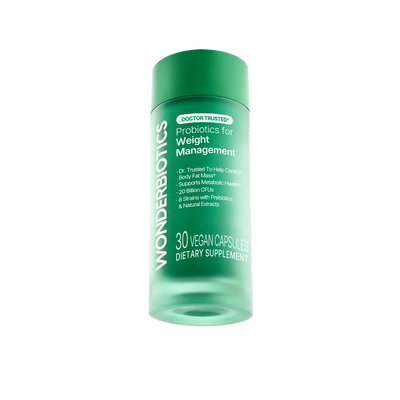
For adults specifically looking for non-GLP-1 supplements for food noise, the combination of B420 for body fat management support, Eriomin for natural GLP-1 support, and a delivery system designed to protect viable organisms represents one coherent strategy. You can learn more about the finished product at the WONDERBIOTICS probiotics for weight management page.
Who This Approach Suits
A non-GLP-1 supplement strategy for food noise is worth considering for:
- Adults whose food thoughts interfere with daily focus and productivity
- People who have tried willpower-based approaches without lasting success
- Those who cannot or prefer not to use GLP-1 medications
- Women over 30 experiencing appetite signaling shifts related to hormonal changes
- Anyone seeking a gut-centered approach to appetite support
It is less appropriate for people expecting pharmaceutical-level appetite suppression. Supplements support signaling pathways; they do not override them the way GLP-1 receptor agonists do.
The Gut-Brain Connection Worth Taking Seriously
The research connecting gut health to appetite regulation has grown substantially. With over 624 clinical studies and 44,692 participants represented at the ingredient level, the field has moved beyond speculation into measurable territory.6
Food noise is a real phenomenon rooted in signaling, and it deserves a serious, mechanism-based response rather than another round of willpower advice. For more exploration of gut-brain topics, visit the WONDERBIOTICS blog. You can also learn more about the company's approach to microbiome-based weight management at wonderbiotics.com.
References
- Blundell JE, Finlayson G, Gibbons C, et al. The neurobiology of appetite: hunger as a driver of food intake. Physiology & Behavior. 2017;178:112-118. https://doi.org/10.1016/j.physbeh.2017.01.037
- U.S. Food and Drug Administration. FDA approves new drug treatment for chronic weight management. FDA News Release. 2021. https://www.fda.gov/news-events/press-announcements/fda-approves-new-drug-treatment-chronic-weight-management
- Liu Y, Zhang W, Wang X, et al. Effect of Eriomin on glucagon-like peptide-1 and metabolic markers: a randomized controlled trial. Journal of Functional Foods. 2021;87:104846. https://doi.org/10.1016/j.jff.2021.104846
- Stenman M, Heyman M, Mattila I, et al. Lactobacillus rhamnosus GG and Bifidobacterium animalis ssp. lactis BB-12 in adults with metabolic syndrome: a randomized controlled trial. British Journal of Nutrition. 2020;123(8):884-894. https://doi.org/10.1017/S0007114520000104
- Salah K, Al-Modhefer AK, Rafiq M. Berberine and dihydroberberine: comparative bioavailability and metabolic effects. Journal of Ethnopharmacology. 2020;259:112919. https://doi.org/10.1016/j.jep.2020.112919
- Markowiak P, Śliżewska K. Effects of probiotics, prebiotics, and synbiotics on human health. Nutrients. 2017;9(9):1021. https://doi.org/10.3390/nu9091021


