


Best Supplements for Reducing Sugar Cravings

Which Supplements Are Best for Reducing Sugar Cravings?
The supplement aisle is full of products marketed for sugar cravings: chromium, glutamine, cinnamon, gymnema, berberine, and a long list of blends with names like Sugar Stop and Crave Crush. The evidence behind these claims is uneven. Some have human RCT data with sugar or carbohydrate craving as a measured endpoint. Most have mechanism-only claims (effects on blood sugar, gut bacteria, or insulin signaling) that get extrapolated into craving claims without direct trial data.
This article covers what the published literature actually says, separates direct craving-endpoint trials from blood-sugar-by-mechanism reasoning, and explains how appetite signaling fits into the picture for craving relief.

The Gist
Only one supplement has direct human RCT data with carbohydrate craving as a measured endpoint: chromium picolinate. Others have mechanism-related evidence (blood sugar regulation, insulin signaling) that does not directly demonstrate craving reduction.
The relevant landscape:
- Direct craving-endpoint evidence: chromium picolinate (one notable trial, specific population)
- Mechanism-only claims: L-glutamine, cinnamon, gymnema (blood sugar effects, no craving endpoint RCTs)
- Appetite-signaling approach: targeted probiotic strains plus citrus flavonoids engaging GLP-1 and energy-intake biology
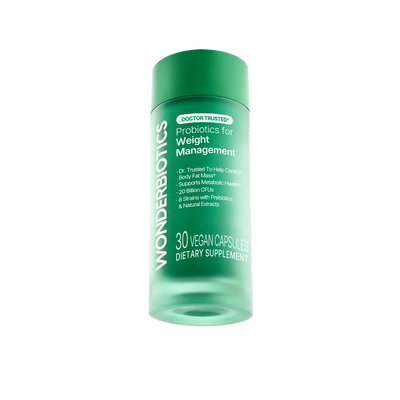
WONDERBIOTICS Probiotics for Weight Management uses the appetite-signaling approach via B420™ and Eriomin® (lemon extract). It does not market itself as a sugar-craving-only supplement; it engages the broader biology of food cravings and energy intake.
How to Read Sugar-Craving Supplement Evidence
Supplements marketed for cravings fall into three evidence categories. Distinguishing them is the difference between buying biology and buying marketing.
Direct craving-endpoint evidence. The supplement has been tested in a randomized controlled trial where sugar craving, carbohydrate craving, or appetite was a pre-specified measured outcome. The published result reports a numerical effect on that outcome compared to placebo.
Mechanism-only evidence. The supplement has been shown to affect a biological process plausibly related to cravings (such as blood sugar regulation or insulin signaling), but no trial has directly measured craving as an outcome. The link between the mechanism and the craving claim is inferred, not demonstrated.
Anecdotal or marketing-only claims. The supplement is sold for craving relief based on traditional use, anecdotal reports, or vague educational copy, with no human trial data on either cravings or directly related mechanisms in humans.
Most products on the shelf sit in the second or third category. The first category is small, and reading the literature honestly means saying so.
Terms to Know!
- Pre-specified endpoint: an outcome a clinical trial declares it will measure before the trial begins; effects on pre-specified endpoints carry more weight than post-hoc findings that emerged during data analysis.
- Mechanism-to-endpoint extrapolation: the inferential leap from "this supplement affects biology X" to "this supplement helps with outcome Y," where Y was not directly measured; common in supplement marketing and a frequent source of overstated claims.
The One Supplement With Direct Craving-Endpoint RCT Data
Chromium picolinate. An 8-week double-blind, placebo-controlled, multi-center trial enrolled 113 adults with atypical depression and randomized them 2:[1] to receive 600 mcg/day of elemental chromium as chromium picolinate or placebo. In the subgroup of patients with high baseline carbohydrate craving, the chromium picolinate group showed significantly greater improvement than placebo on Hamilton Depression Rating Scale items measuring carbohydrate craving, appetite increase, and increased eating (65% versus 33% improvement on total HAM-D-29 scores; p\<0.05).[1]
Several caveats sit alongside this result. The trial enrolled adults with atypical depression who reported severe carbohydrate craving as a depression symptom, not a general adult population looking for craving relief. The headline effect appeared in a subgroup analysis, not in the overall trial population. The supplement was studied at 600 mcg/day, well above the 35 mcg/day adequate intake suggested for adult men and 25 mcg/day for adult women in U.S. dietary reference guidance.[2] Higher chromium intake from supplements raises safety considerations worth discussing with a clinician, particularly for people on medications or with existing kidney or liver conditions.
The honest reading: chromium picolinate has the strongest direct craving-endpoint evidence in this category, and that evidence is from one trial, in one population, at a specific dose. Replication in general adult populations with craving as a stand-alone endpoint remains limited.
The Supplements With Mechanism-Only Evidence
L-glutamine is widely marketed for sugar cravings. The mechanism arguments cited include effects on gut microbiota composition, modest improvements in glycemic markers in type 2 diabetes (such as HbA1c and fasting glucose in small studies), and a role as a GLP-1 secretagogue when administered with meals.[3] What the published literature does not contain is a randomized controlled trial measuring sugar or carbohydrate craving as a pre-specified primary endpoint in a general adult population. The craving claims rest on mechanism-to-endpoint extrapolation.
Cinnamon has substantial RCT evidence for glycemic effects in type 2 diabetes and metabolic syndrome. Meta-analyses report reductions in fasting plasma glucose, HbA1c, and insulin resistance markers when cinnamon is supplemented at typical doses studied.[4] The link to sugar cravings is inferred: more stable blood sugar may translate into fewer reactive cravings. This is a plausible mechanism. It is not a direct demonstration. Cinnamon RCTs in general have measured glycemic outcomes, not craving outcomes.
Other commonly marketed ingredients (gymnema, alpha-lipoic acid, berberine, magnesium) sit in similar territory. Some have legitimate metabolic effects in specific populations. None have established their effects on craving as a directly measured endpoint in adequately powered general-adult RCTs.
The mechanism-only category is not necessarily ineffective. It is honestly described as "supports a mechanism plausibly relevant to cravings" rather than "demonstrated to reduce cravings."
The Appetite-Signaling Approach
A different angle on craving biology is to engage appetite signaling directly. Hunger, fullness, and food cravings are coordinated by hormones (GLP-1, leptin, ghrelin, peptide YY) and the gut-brain axis. Supplements engaging this layer target the upstream biology of cravings rather than the downstream consequence of blood sugar variability alone.
Targeted probiotic strains can be relevant here. In a 6-month randomized, placebo-controlled trial in 225 overweight and obese adults aged 18-65, daily energy intake in the Bifidobacterium animalis subsp. lactis 420 group was reduced by approximately 300 kcal compared to placebo, with body fat mass differing by -4.0% versus placebo (P=0.002) and waist circumference dropping by 2.4 cm more than placebo (post-hoc factorial analysis).[5] Energy intake reduction is a downstream measure of how cravings translate into eating behavior. The trial enrolled general overweight/obese adults rather than any specific subpopulation, so the endpoints inform B420™'s rationale for inclusion in a craving-relevant formula and do not constitute a direct demonstration in any sub-population defined by sugar craving specifically.
Citrus flavonoid extracts target a related signaling layer. Ingredient-level clinical research with Eriomin® (lemon extract) in prediabetic adults reports support for natural GLP-1 levels and adiponectin levels.[6] Whether ingredient-level GLP-1 modulation translates into measurable craving reduction in non-prediabetic populations remains an open question. The mechanism is GLP-1-related; the demonstrated population is prediabetic adults; extrapolation outside that context is appropriately cautious.
The appetite-signaling approach engages a different layer than chromium-style craving relief. Chromium picolinate, in the population where it has been studied, appears to act partly on glucose-insulin signaling and depression-related appetite dysregulation. Probiotic + flavonoid approaches engage hormonal appetite signaling more directly. The two approaches are not in competition; they target related but distinct biology.
How WONDERBIOTICS Fits the Cravings Picture
WONDERBIOTICS Probiotics for Weight Management is not marketed as a sugar-craving-specific supplement. It is a weight-management formula that engages appetite biology, with sugar cravings being one expression of disrupted appetite signaling.
- B420™ is the probiotic strain in the formula, with the published 6-month RCT in overweight/obese adults (described above) as the ingredient-level evidence.[5] Energy intake reduction is the trial endpoint most relevant to cravings; sugar cravings specifically were not a measured endpoint.
- Eriomin® (lemon extract) is a citrus flavonoid extract with ingredient-level evidence for support of natural GLP-1 and adiponectin levels in prediabetic adults.[6] The GLP-1 mechanism is part of appetite signaling and indirectly relevant to cravings.
- Dihydroberberine is a modified version of berberine that achieves higher plasma berberine exposure at lower doses. It supports maintaining healthy blood sugar levels already within the normal range. Direct human evidence at the dihydroberberine level remains limited; its role here is to deliver berberine more effectively, with the active end-form remaining berberine in tissue.
The formula also features CraveLock™ Technology, a proprietary synergistic approach to appetite management and Food Noise.
WONDERBIOTICS uses PolarSeal Technology to help protect the probiotic blend. In testing, 99.9% of the bacterial strain survived gut-like acidic conditions, and 98.2% of the bacteria remained alive through to the point of consumption.
The core ingredients in the formula are backed by 624 clinical studies covering 44,692 participants. The formula was developed by PhD scientists and industry experts.
We recommend taking it consistently for 3-6 months alongside a balanced diet and regular movement, to give your gut time to adapt and your body time to respond. The timeline reflects how the underlying biology actually works.
FAQ
If chromium picolinate has the strongest direct evidence, why not just take chromium?
Chromium picolinate's strongest direct evidence is in adults with atypical depression and severe carbohydrate craving, at 600 mcg/day. That study population, dose, and trial size do not automatically generalize to a healthy adult looking for occasional craving relief. People interested in chromium supplementation should discuss it with a clinician, particularly anyone on medications or with kidney or liver conditions.
Will any of these supplements stop sugar cravings overnight?
No supplement stops cravings overnight. The biology of appetite signaling adapts over weeks. Most trials in this space run 8-24 weeks. We recommend 3-6 months of consistent use for the appetite-signaling approach, to give your gut time to adapt and your body time to respond.
Do I need to cut out sugar entirely while taking these?
A reasonable diet pattern (whole foods, regular meals, adequate protein and fiber) makes any supplement work better and is the foundation of craving management. Supplements work alongside diet and lifestyle changes, not as replacements for them.
Direct Evidence Lives in a Smaller Box Than Marketing Suggests
"Best for sugar cravings" sounds like a settled question. The literature tells a more honest story: one supplement (chromium picolinate) has direct human RCT data with carbohydrate craving as a measured endpoint, in a specific population, at a specific dose. Other commonly marketed options engage related mechanisms (blood sugar regulation, gut microbiota) without direct craving-endpoint evidence. Probiotic plus flavonoid approaches target appetite signaling and energy intake, with strain-level evidence in mixed-sex overweight/obese adults.
A supplement formulated around targeted strains and ingredients that engage appetite signaling, with delivery technology that protects live cultures, is part of a broader strategy that treats cravings as an appetite biology problem rather than a sugar-only problem. WONDERBIOTICS Probiotics for Weight Management is one such option.
This article is for educational purposes only and is not medical advice. It is not intended to diagnose, treat, cure, or prevent any disease. If you have symptoms, a medical condition, or take medications, talk with a licensed clinician before making health changes or starting supplements.
References
- Docherty JP, Sack DA, Roffman M, Finch M, Komorowski JR. A double-blind, placebo-controlled, exploratory trial of chromium picolinate in atypical depression: effect on carbohydrate craving. J Psychiatr Pract. 2005;11(5):302-314. https://journals.lww.com/practicalpsychiatry/fulltext/2005/09000/a_double_blind,_placebo_controlled,_exploratory.4.aspx
- National Institutes of Health, Office of Dietary Supplements. Chromium: Health Professional Fact Sheet. https://ods.od.nih.gov/factsheets/Chromium-HealthProfessional/
- Samocha-Bonet D, Chisholm DJ, Holst JJ, Greenfield JR. Glycemic effects and safety of L-glutamine supplementation with or without sitagliptin in type 2 diabetes patients - a randomized study. PLoS One. 2014;9(11):e113366. https://www.ncbi.nlm.nih.gov/pmc/articles/PMC4239068/
- Zarezadeh M, Musazadeh V, Faghfouri AH, et al. The effect of cinnamon supplementation on glycemic control in patients with type 2 diabetes or with polycystic ovary syndrome: an umbrella meta-analysis on interventional meta-analyses. Diabetol Metab Syndr. 2023;15(1):127. https://www.ncbi.nlm.nih.gov/pmc/articles/PMC10268424/
- Stenman LK, Lehtinen MJ, Meland N, et al. Probiotic with or without fiber controls body fat mass, associated with serum zonulin, in overweight and obese adults: randomized controlled trial. EBioMedicine. 2016;13:190-200. https://www.sciencedirect.com/science/article/pii/S2352396416304972
- Ribeiro CB, Ramos FM, Manthey JA, Cesar TB. Effectiveness of Eriomin® in managing hyperglycemia and reversal of prediabetes condition: A double-blind, randomized, controlled study. Phytother Res. 2019;33(7):1921-1933. https://onlinelibrary.wiley.com/doi/10.1002/ptr.6386


