
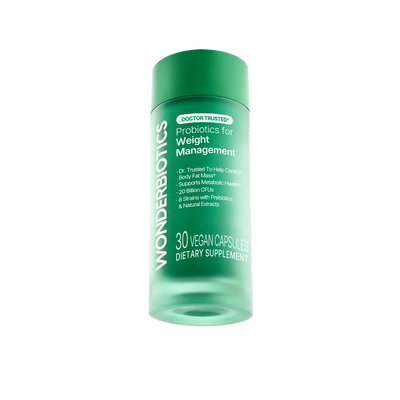


Best Probiotics for Weight Loss: A Strain-Level Guide

Best Probiotics for Weight Loss: A Strain-Level Buying Guide
The probiotic market is saturated with products making weight loss claims based on little more than high CFU counts and generic strain blends. The reality is that most probiotic strains have never been tested for body composition outcomes, and the few that have been studied show modest but measurable effects when the right strain is delivered at the right dose.
The best probiotics for weight loss are those with named strains that have been tested in randomized controlled trials for body composition outcomes, not the ones with the highest CFU counts or the longest ingredient lists.
This article covers the strains with the strongest clinical evidence for weight management, how to evaluate a probiotic product for weight loss purposes, and what realistic expectations look like based on the published data.

What the Evidence Says About Probiotics and Weight Loss
The idea that gut bacteria influence body weight is supported by multiple lines of evidence. Studies in germ-free mice show that transplanting gut microbiota from obese donors leads to fat gain, while transplants from lean donors do not.1 In humans, observational studies consistently show differences in gut microbiome composition between individuals with obesity and those with normal weight.
A systematic review and meta-analysis published in the International Journal of Food Sciences and Nutrition pooled data from 15 randomized controlled trials and found that probiotic supplementation resulted in a modest but statistically significant reduction in body weight and body fat percentage compared to placebo.2 The authors noted that the effect size was small and varied significantly depending on the strains used, the duration of supplementation, and the study population.
This meta-analysis highlights a critical point: probiotics are not interchangeable. The effect of one strain does not transfer to another, and the benefits observed in trials depend entirely on whether the product contains the specific strain that was studied.
Terms to Know!
- CFU count: the number of colony-forming units in a probiotic product, indicating the quantity of live bacteria. A higher CFU count does not correlate with greater efficacy if the strains lack clinical evidence.
- Strain specificity: the principle that probiotic effects are specific to individual strains. A benefit demonstrated for one strain of Bifidobacterium does not apply to all Bifidobacterium strains.
Strains With Clinical Evidence for Weight Management
Bifidobacterium animalis subsp. lactis B420
B420 has the strongest body composition evidence of any single probiotic strain. In a 6-month randomized controlled trial of 225 overweight adults, B420 supplementation reduced body fat mass by approximately 1.4 kg compared to placebo, with the most significant reduction in trunk fat (1.2 kg). The trial also reported improved insulin sensitivity and a reduction in energy intake.
The study used a daily dose of 10 billion CFU and ran for 6 months, providing a clear dosing and duration benchmark. B420 is the same strain used in the WONDERBIOTICS formulation, where it is combined with Eriomin and additional strains in a formula designed around metabolic health.
Lactobacillus gasseri SBT2055
L. gasseri SBT2055 has been studied in multiple trials for its effects on body composition. A randomized controlled trial in overweight adults found that 12 weeks of supplementation reduced abdominal visceral fat area by 8.5% compared to placebo.3 A separate trial in obese adults found similar reductions in body weight, waist circumference, and hip circumference over 12 weeks.4
The mechanism likely involves L. gasseri's effects on dietary fat absorption and its influence on the gut microbiome composition in ways that reduce fat storage.
Lactobacillus plantarum
A strain of L. plantarum was tested in a double-blind, placebo-controlled trial that found 12 weeks of supplementation reduced body fat and waist circumference in overweight adults.5 The trial reported changes in gut microbiome composition consistent with improved metabolic health.
Multi-Strain Approaches
Some studies have tested combinations of strains. A meta-analysis found that multi-strain probiotics showed slightly larger effects on body weight than single-strain formulations, though the difference was modest and the evidence quality was limited by heterogeneity across trials.2 The advantage of multi-strain approaches is theoretical: different strains may target different mechanisms. The challenge is that the combination must be tested as a whole, and most combinations have not been.
How to Evaluate a Probiotic for Weight Loss
The buying decision should be based on specific, verifiable criteria rather than marketing claims.
Strain identification. The product must list the specific strain designation, such as B420 or SBT2055. Without this, there is no way to connect the product to published evidence. A product listing Bifidobacterium animalis subsp. lactis without specifying B420 could contain any strain in that species, most of which have no body composition data.
Clinical trial alignment. The strain should have been tested in a randomized controlled trial for body composition or weight outcomes. The dose in the product should match or exceed the dose used in the trial. The B420 trial used 10 billion CFU daily for 6 months. WONDERBIOTICS includes B420 at clinically relevant dosing within a formula designed for metabolic health.
Delivery technology. Probiotic bacteria must survive gastric acid to reach the intestine where they act. WONDERBIOTICS uses PolarSeal Technology, which in testing showed 99.9% strain survival in gut-like acidic conditions and 98.2% bacterial viability through the point of consumption. These are test results, not measurements of in-vivo survival through the full digestive tract.
Ingredient-level evidence depth. The core ingredients in the WONDERBIOTICS formula are backed by 624 clinical studies involving 44,692 participants. This is ingredient-level evidence, not finished-product data. Each ingredient has been studied individually for its specific effects.
Formula coherence. A product designed around metabolic mechanisms, where each ingredient serves a defined purpose, offers more than a generic blend. WONDERBIOTICS combines B420 for body fat management, Eriomin for GLP-1 support, and additional strains for gut health. You can read more about how these ingredients work together on the WONDERBIOTICS blog.
Realistic Expectations
The body fat reduction demonstrated in the B420 trial was approximately 1.4 kg over 6 months. This is a meaningful result, but it is not dramatic. For context, a 1.4 kg reduction in body fat over 6 months translates to roughly 54 calories per day of net energy deficit, which is within the range that sustained metabolic changes can produce.
Probiotics for weight loss work through metabolic mechanisms: altered fat storage, improved insulin sensitivity, reduced energy intake through appetite signaling, and changes in gut microbiome composition. These mechanisms produce gradual effects that compound over months. They are not appetite suppressants or fat blockers, and they should not be expected to produce rapid visible changes.
The most realistic framing is that a clinically tested probiotic provides metabolic support that works alongside diet and exercise to improve body composition outcomes. The B420 trial was conducted without requiring dietary or exercise changes from participants, meaning the effects were produced by the probiotic alone. Combining supplementation with targeted lifestyle changes would be expected to produce larger effects.
What to Avoid
Several common product features should raise questions:
- Proprietary blends without strain identification. Products that list only the genus and species without specifying the strain designation cannot be matched to clinical evidence. The strain name is the only link to research.
- Extreme CFU counts without evidence. Products advertising 50 billion or 100 billion CFU often imply that more bacteria equals more benefit. There is no evidence that higher CFU counts improve weight loss outcomes. The B420 trial used 10 billion CFU and produced measurable results.
- Weight loss claims without trial references. Products that claim clinical evidence should cite the specific studies. Without this, the claim is marketing language.
Practical Takeaways
The best probiotic for weight loss is one that contains a named strain with published body composition evidence, at a dose matching the clinical trial, delivered through technology that protects the bacteria through gastric acid. B420 has the strongest evidence base, with a 6-month randomized controlled trial demonstrating body fat reduction and improved metabolic markers.
Set realistic expectations. Probiotic effects on body composition are real but modest, requiring months of consistent supplementation. Talk with your clinician before starting any probiotic, particularly if you take medications for metabolic conditions or have gastrointestinal disorders.
This article is for educational purposes only and is not medical advice. It is not intended to diagnose, treat, cure, or prevent any disease. If you have symptoms, a medical condition, are pregnant or breastfeeding, or take medications, talk with a licensed clinician before making health changes or starting supplements.
References
- Turnbaugh PJ, Ley RE, Mahowald MA, Magrini V, Mardis ER, Gordon JI. An obesity-associated gut microbiome with increased capacity for energy harvest. Nature. 2006;444(7122):1027-1031. https://pubmed.ncbi.nlm.nih.gov/17183312/
- Borshchevskaya LN, Katrushina AS, Baryshnikova LM, et al. Effects of probiotic supplementation on body weight and body composition: a systematic review and meta-analysis. Int J Food Sci Nutr. 2019;70(8):945-955. https://pubmed.ncbi.nlm.nih.gov/31012233/
- Kadooka Y, Sato M, Imaizumi K, et al. Regulation of abdominal adiposity by probiotics (Lactobacillus gasseri SBT2055) in adults with obese tendencies in a randomized controlled trial. Eur J Clin Nutr. 2010;64(6):636-643. https://pubmed.ncbi.nlm.nih.gov/20216555/
- Kadooka Y, Sato M, Ogawa A, et al. Effect of Lactobacillus gasseri SBT2055 on abdominal adiposity in adults with obese tendencies: a randomized controlled trial. Br J Nutr. 2013;110(9):1699-1707. https://pubmed.ncbi.nlm.nih.gov/23590984/
- Sharafedtinov KK, Plotnikova OA, Alexeeva RI, et al. Hypocaloric diet supplemented with probiotic cheese improves body mass index in overweight adults. J Nutr Sci. 2013;2:e24. https://nutritionj.biomedcentral.com/articles/10.1186/1475-2891-12-138
- John GK, Wang L, Nanavati J, et al. Dietary alteration of the gut microbiome and its impact on weight and fat mass. Acta Sci Gastrointest Disord. 2018;1(2):16-23. https://pubmed.ncbi.nlm.nih.gov/30084015/
- Sanmiguel C, Gupta A, Mayer EA. Gut microbiome and obesity: a plausible explanation for its effects on metabolism. Curr Obes Rep. 2015;4(2):250-261. https://pubmed.ncbi.nlm.nih.gov/25862181/


