


Best Dihydroberberine Supplement: Bioavailability Evidence

Best Dihydroberberine Supplement: How the Bioavailability Research Changes the Picture
Dihydroberberine (DHB) is the reduced derivative of berberine, developed specifically to address berberine's well-documented absorption challenge. Most people searching for DHB already know what berberine does. What they want to know is whether the bioavailability advantage is real, what the evidence actually shows, and what that means for choosing a supplement. The answers are more nuanced than most product pages suggest.

Why Berberine Bioavailability Became a Problem to Solve
Berberine is a plant alkaloid with a substantial research base for metabolic health. Its challenge has always been delivery. Oral bioavailability of standard berberine is estimated at less than 1%, primarily because of poor intestinal absorption and extensive first-pass metabolism in the gut and liver. This low bioavailability has led to the common practice of using high doses (typically 1–1.5g per day), which in turn increases the frequency of gastrointestinal side effects including nausea, diarrhea, and abdominal discomfort.
The search for a more absorbable berberine form led to dihydroberberine. DHB is converted back to berberine after intestinal absorption, meaning it functions as a more efficient berberine-delivery mechanism rather than as a structurally distinct compound with independent effects.
What the Human Pharmacokinetic Evidence Shows
The first published human pharmacokinetic study of DHB compared oral absorption of 100 mg and 200 mg DHB doses against a 500 mg dose of standard berberine and placebo in a randomized, double-blind, crossover pilot study.1 Both DHB doses produced significantly greater plasma berberine concentrations over a two-hour measurement window compared to the 500 mg berberine dose. This is the primary human evidence for DHB's bioavailability advantage: a lower milligram dose of DHB delivers more berberine into systemic circulation than a larger dose of standard berberine.
Two important caveats apply. First, the study enrolled only five participants, all male, making it a preliminary pilot study rather than a definitive comparative trial. Second, glucose and insulin levels showed no statistically significant differences between the DHB and berberine conditions in this pilot. The pharmacokinetic advantage is well-supported; the translation to meaningfully different clinical outcomes in larger populations remains to be established in longer trials.
Terms to Know!
- Bioavailability: the proportion of an orally ingested compound that reaches systemic circulation in its active form. A compound with low bioavailability is largely metabolized before reaching the bloodstream, limiting how much active compound actually exerts effects at its intended site.
The Evidence Base That Makes Bioavailability Matter
The bioavailability argument for DHB only matters if berberine has clinically relevant effects at the concentrations that DHB delivers more efficiently. The berberine evidence base is substantial.
In a randomized, double-blind, placebo-controlled trial of 116 patients with type 2 diabetes and dyslipidemia, three months of berberine at 1g per day produced significant improvements in fasting plasma glucose, postprandial glucose, hemoglobin A1c (HbA1c), triglycerides, total cholesterol, and low-density lipoprotein (LDL) compared to placebo, with all changes reaching P\<0.0001.2 A 2021 systematic review and meta-analysis of randomized clinical trials confirmed berberine's effects across fasting plasma glucose, triglycerides, total cholesterol, LDL, and homeostasis model assessment-insulin resistance (HOMA-IR) as consistent findings across multiple studies.3
Berberine's effects are at their strongest for blood glucose and lipid parameters in people with existing metabolic dysfunction. In healthy individuals with normal glucose and lipid profiles, the magnitude of effect is smaller and less consistent. Berberine works alongside rather than independently of lifestyle factors.
If DHB can deliver comparable plasma berberine at lower doses, the implication is that it may achieve similar metabolic support with less gastrointestinal burden. That remains a reasonable hypothesis; the head-to-head clinical outcome data comparing DHB to berberine across longer intervention periods are still limited.
What the Best DHB Supplement Actually Needs to Include
Three things separate a well-designed DHB supplement from a generic capsule:
Dose transparency. The published pharmacokinetic study used 100 mg and 200 mg DHB doses. A supplement should disclose the DHB content per serving clearly, not bury it in a proprietary blend.
Manufacturing quality. DHB is a reduced derivative that can oxidize back to berberine during storage. The stability and purity of the DHB form in a finished product matters. Products should ideally specify what form of DHB is used and how it is stabilized.
Formula context. DHB alone addresses one metabolic pathway: berberine delivery. For a weight management goal, this is one input among several. A formula that pairs DHB with ingredients addressing other relevant pathways, such as gut composition or appetite regulation, is more rationally designed than a standalone DHB product.
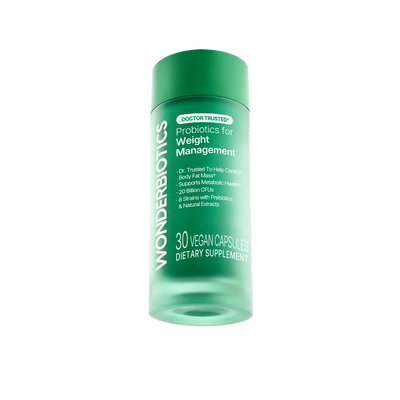
WONDERBIOTICS includes Dihydroberberine as one of three key ingredients in the Probiotics for Weight Management formula. The formula combines DHB with B420™, the probiotic strain with body fat and waist circumference evidence from a 6-month randomized controlled trial (RCT), and Eriomin® (lemon extract), which has ingredient-level clinical research reporting support for natural glucagon-like peptide-1 (GLP-1) levels. The formula also features CraveLock™ Technology, a proprietary approach to appetite management and Food Noise. This multi-ingredient context is where DHB functions most rationally: addressing one metabolic layer within a broader intervention.
For delivery, WONDERBIOTICS uses PolarSeal Technology to help protect the probiotic blend. In testing, 99.9% of the bacterial strain survived conditions simulating gut-like acidity, and 98.2% of the bacteria remained alive through the point of consumption.
The key ingredients behind the formula are backed by 624 clinical studies and 44,692 participants. The formula was developed by a team of PhD scientists and industry experts.
Putting It in Perspective
DHB is a legitimate advance in berberine delivery, and the human pharmacokinetic evidence provides a credible basis for choosing it over standard berberine. The clinical outcome story is still developing. For metabolic support as part of a weight management approach, DHB is most useful as one component of a complete formula rather than as a standalone supplement.
We recommend a usage period of 3 to 6 months, to give your gut time to adapt and your body time to respond, alongside a nutritious diet and consistent physical activity.
Explore WONDERBIOTICS Probiotics for Weight Management
References
- Moon JM, Ratliff KM, Hagele AM, Stecker RA, Mumford PW, Kerksick CM. Absorption kinetics of berberine and dihydroberberine and their impact on glycemia: a randomized, controlled, crossover pilot trial. Nutrients.2022;14(1):124. https://www.ncbi.nlm.nih.gov/pmc/articles/PMC8746601/
- Zhang Y, Li X, Zou D, et al. Treatment of type 2 diabetes and dyslipidemia with the natural plant alkaloid berberine. J Clin Endocrinol Metab. 2008;93(7):2559-2565. https://academic.oup.com/jcem/article-abstract/93/7/2559/2598635
- Ye Y, Liu X, Wu N, et al. Efficacy and safety of berberine alone for several metabolic disorders: a systematic review and meta-analysis of randomized clinical trials. Front Pharmacol. 2021;12:653887. https://pmc.ncbi.nlm.nih.gov/articles/PMC8107691/


