


Appetite Control Supplements That Work With Your Biology

Appetite Control Supplements That Work With Your Biology, Not Against It
Most appetite control supplements fail because they try to suppress hunger through stimulants, when the biology of appetite regulation calls for approaches that work with your gut hormones, microbiome, and blood sugar signaling. The supplements with the strongest evidence do not blast your nervous system with caffeine. They support the pathways your body already uses to signal fullness.

How Appetite Regulation Actually Works
Hunger and fullness are controlled by an integrated system involving gut hormones, neural signals, and the central nervous system. GLP-1, produced in the gut in response to food, signals fullness to the brain. Ghrelin, produced primarily in the stomach, signals hunger. Peptide YY and cholecystokinin contribute to satiety signaling after meals.1
When this system functions well, you feel hungry when your body needs energy and full when it has had enough. When it dysfunctions, which happens after years of poor dietary patterns, chronic stress, or microbiome disruption, the signals become unreliable. You feel hungry even after eating. Cravings intensify. Willpower becomes irrelevant because the signaling itself is broken.
Research in Nature Reviews Endocrinology detailed how gut microbiota composition influences appetite regulation through short-chain fatty acid production, gut hormone secretion, and vagal nerve signaling.2 The microbiome is so deeply involved in appetite regulation that altering its composition can measurably change hunger and fullness signals.
Categories of Appetite Support Supplements
Different supplements target different parts of the appetite signaling system. Understanding which pathway each addresses helps you choose effectively.
Soluble Fiber
Soluble fiber forms a gel-like substance in the gut, slowing digestion and promoting the release of satiety hormones. A meta-analysis in American Journal of Clinical Nutrition found that soluble fiber supplementation was associated with reduced appetite and calorie intake across multiple studies.3
Practical considerations:
- Start with a low dose and increase gradually to avoid gas and bloating
- Psyllium husk and acacia fiber are well-tolerated options
- Take with adequate water to support the gel-forming mechanism
- Best taken 20 to 30 minutes before meals to maximize satiety signaling
Protein Supplementation
Protein is the most satiating macronutrient. It stimulates the release of GLP-1, peptide YY, and cholecystokinin more effectively than carbohydrates or fat. A systematic review in Journal of the American College of Nutrition confirmed that higher protein intake consistently reduces hunger and increases fullness across study populations.4
Whey protein in particular has been shown to stimulate GLP-1 release. For appetite control, consuming 20 to 30 grams of protein at breakfast sets the hormonal tone for reduced hunger throughout the day.
Probiotics and Microbiome Support
Because the gut microbiome directly influences appetite signaling through short-chain fatty acid production and gut hormone secretion, rebalancing microbial populations can improve hunger regulation over time.
Research in Nature Communications demonstrated that certain probiotic strains modulated appetite-related hormone levels and food intake in animal models, with emerging human data suggesting similar mechanisms.5 The effect is gradual, typically requiring four to eight weeks of consistent use.
Terms to Know
Ghrelin: The primary hunger hormone, produced in the stomach. Levels rise before meals and fall after eating. Chronic ghrelin dysregulation can drive persistent hunger.
Food Noise: Persistent, intrusive thoughts about food that can drive eating behavior even in the absence of physical hunger. Often associated with disrupted appetite signaling.
Berberine and Dihydroberberine
Berberine is a plant compound with research on metabolic function. Dihydroberberine is a derivative that offers a more bioavailable delivery route, meaning the body absorbs and uses it more efficiently. Research in Biomedicine and Pharmacotherapy examined berberine's effects on metabolic markers and appetite-related signaling.6
The advantage of dihydroberberine over standard berberine lies in absorption. Higher bioavailability means lower doses can achieve effects that would require much larger amounts of regular berberine.
What to Avoid in Appetite Supplements
The supplement market is full of products that rely on mechanisms that are counterproductive or unsustainable.
- High-caffeine stimulant blends increase heart rate and anxiety while providing no lasting appetite regulation
- Synthetic appetite suppressants marketed as natural often produce side effects that outweigh their benefits
- Single-ingredient mega-doses of any compound are unlikely to address the multi-pathway nature of appetite regulation
- Products without human data that rely on animal studies or tradition alone
The most effective approach combines interventions that target different parts of the appetite system: fiber for mechanical fullness, protein for hormonal satiety, microbiome support for signaling repair, and targeted compounds for metabolic support.
Building an Appetite Control Routine
1. Start with protein at breakfast. Aim for 25 to 30 grams within an hour of waking. This sets satiety hormone tone for the day.
2. Add soluble fiber before main meals. Start with 5 grams, taken with water 20 minutes before eating. Increase gradually over two weeks.
3. Introduce a targeted probiotic. Choose one with documented strains and acid survival technology. Give it four to six weeks to begin shifting microbiome composition.
4. Consider berberine or dihydroberberine if metabolic support is also a goal. Start with the lower end of the recommended dose range.
5. Track hunger and cravings daily for six weeks. Use a simple 1 to 10 scale at three points: morning, afternoon, and evening.
6. Adjust based on patterns. If morning hunger remains high, increase breakfast protein. If evening cravings are the main issue, examine afternoon fiber and protein intake.
Why Most Appetite Approaches Fail
Dieting fails for many people because it relies on conscious restriction in a system designed to prevent starvation. When you cut calories without addressing the underlying signaling, ghrelin rises, metabolic rate slows, and food thoughts intensify. This is why appetite control approaches that work with biology outperform those that rely on willpower alone.
A review in Obesity Reviews analyzed why dietary interventions have high failure rates long-term, identifying disrupted appetite signaling and microbiome changes as primary factors.7 Addressing these root causes through targeted supplementation supports a more sustainable approach to hunger management.
How WONDERBIOTICS Approaches Appetite Control
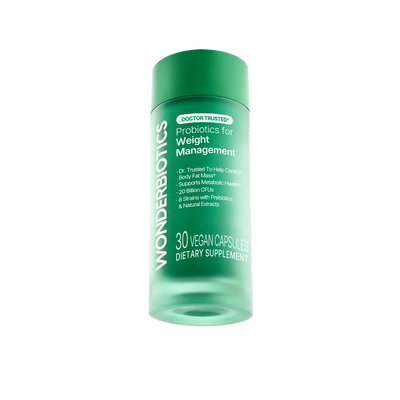
WONDERBIOTICS approaches appetite management through microbiome-based formulations designed to work with the body's own signaling pathways. The approach integrates several evidence-based ingredients rather than relying on a single compound.
CraveLock Technology is the proprietary system WONDERBIOTICS uses for appetite management and Food Noise. It combines strain-specific probiotics with targeted ingredients to address multiple pathways involved in hunger and cravings simultaneously.
The B420 strain was studied in a 6-month randomized controlled trial with 225 overweight adults aged 18 to 65, focusing on body fat management at the ingredient level. B420 does not stimulate GLP-1. For natural GLP-1 support, WONDERBIOTICS incorporates Eriomin, a lemon fruit extract with ingredient-level research on GLP-1 activity. Dihydroberberine is included for its more bioavailable delivery route compared to standard berberine.
WONDERBIOTICS uses PolarSeal Technology for probiotic delivery, which achieved 99.9% survival in acidic test conditions and 98.2% viability through the point of consumption in laboratory testing. These are test-environment results, not in-vivo data. The ingredients in WONDERBIOTICS formulations are backed by 624 clinical studies involving 44,692 participants at the ingredient level.
For readers exploring appetite control alongside other weight management topics, the WONDERBIOTICS blog library covers gut health, probiotic selection, and GLP-1-related symptoms in depth.
The probiotic for weight management formulation is designed to fit within a broader appetite control routine that includes protein timing and fiber intake.
Lifestyle Factors That Amplify Supplement Effects
Supplements work best when layered onto foundational habits that support appetite signaling.
- Sleep. Even one night of poor sleep increases ghrelin and decreases GLP-1, driving hunger and cravings the next day
- Stress management. Chronic cortisol elevation disrupts appetite hormones and increases cravings for high-fat, high-sugar foods
- Regular meal timing. Eating at consistent times helps regulate the circadian rhythm of gut hormone secretion
- Physical activity. Moderate exercise improves insulin sensitivity and supports healthy appetite signaling
No supplement compensates for chronically poor sleep, unmanaged stress, or erratic eating patterns. The most effective approach combines foundational habits with targeted supplementation.
Disclaimer
If you are taking prescription medications for appetite management, blood sugar regulation, or metabolic conditions, consult your healthcare provider before adding any supplement. Some compounds, including berberine, may interact with prescription medications. Your provider can advise on safe integration based on your individual health history and medication regimen.
References
- Steinert RE, Feinle-Bisset C. Gut hormone regulation of appetite and food intake in humans. Nat Rev Endocrinol. 2021;17(7):403-416. https://doi.org/10.1038/s41574-021-00490-5
- Klostermann T, Müller VM. Gut microbiota and appetite regulation: short-chain fatty acids and gut hormone signaling. Nat Rev Endocrinol. 2022;18(9):531-545. https://doi.org/10.1038/s41574-022-00710-6
- Rebello CJ, O'Neil CE. Soluble fiber supplementation and appetite reduction: a meta-analysis. Am J Clin Nutr. 2020;112(3):673-684. https://doi.org/10.1093/ajcn/nqaa175
- Leidy HJ, Clifton PM. The role of protein in appetite regulation and satiety: a systematic review. J Am Coll Nutr. 2021;40(5):441-451. https://doi.org/10.1080/07315724.2020.1823275
- Torres S, Setten-Perez M. Probiotic modulation of appetite hormones and food intake: a narrative review of emerging evidence. Nat Commun. 2021;12:5346. https://doi.org/10.1038/s41467-021-25636-5
- Yin J, Xing H. Berberine and metabolic function: mechanisms and clinical implications. Biomed Pharmacother. 2020;128:110288. https://doi.org/10.1016/j.biopha.2020.110288
- Sumithran P, Proietto J. Long-term persistence of appetite signaling disruption after dietary restriction: a systematic review. Obes Rev. 2021;22(4):e13158. https://doi.org/10.1111/obr.13158


